How to Find the Best Solar Panels for Your Home Based on Load Calculations
January 11, 2023
The Potential of Renewable Energy in Pakistan – What You Need To Know
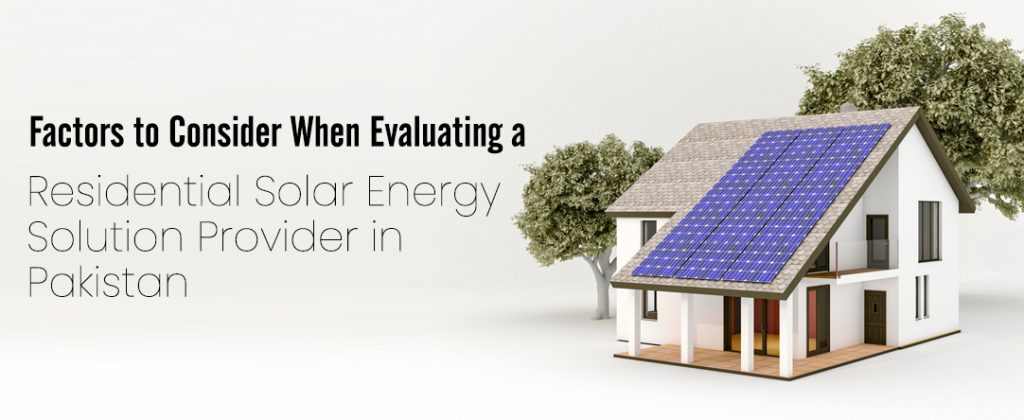
January 19, 2023Factors to Consider When Evaluating a Residential Solar Energy Solution Provider in Pakistan
Solar energy is quickly becoming one of the most popular and sustainable forms of power worldwide. It’s cost‑effective, reliable, and environmentally friendly—but choosing the right solar provider is just as important as choosing the right panels.
If you’re looking for a residential solar energy solution provider in Pakistan, here are the key factors to consider in 2026 to ensure you get a high‑quality, reliable system.
1. Provider Experience and Track Record
Before hiring a solar provider, check their experience and track record :
- Years in business – how long have they been installing solar systems?
- Number of installations – do they specialize in residential, commercial, or both?
- Project portfolio – ask for examples of similar residential projects (size, location, roof type).
- Industry affiliations – are they members of recognized solar associations or certified by major manufacturers?
A provider with a solid history is more likely to handle design, permitting, and installation smoothly.
2. References and Customer Reviews
Ask for references and read reviews :
- Request contact information for past clients, especially those with systems similar to what you want.
- Check Google reviews, Facebook pages, and local directories for feedback.
- Look for comments on:
- System performance and reliability.
- After‑sales service and responsiveness.
- Adherence to timelines and budgets.
Reputable providers are usually happy to share references and case studies.
3. Location, Infrastructure, and Logistics
Consider the provider’s operational capacity :
- Office and warehouse – do they have a local presence or at least reliable logistics?
- Team size and expertise – do they employ qualified engineers, electricians, and installers?
- Local knowledge – are they familiar with your DISCO (eg, LESCO, K‑Electric) and its net metering requirements?
Locally or regionally experienced providers often handle permitting, inspections, and grid connections more efficiently.
4. Certifications, Licensing, and Insurance
Verify legal and technical credentials :
- Licensing – are they registered with relevant authorities (eg, AEDB, provincial energy departments)?
- Certifications – do they hold certifications from major panel or inverter brands (eg, Jinko, LONGi, Huawei, Sungrow)?
- Insurance – do they carry liability insurance and workers’ compensation?
This protects you in case of accidents, defects, or disputes.
5. Cost Estimate and Project Timeline
Get clear, detailed quotes :
- System cost – breakdown of panels, inverter, mounting, wiring, labor, and any batteries.
- Payment schedule – deposit, progress payments, final payment.
- Timeline – estimated start date, installation duration, and commissioning date.
- Hidden costs – clarify if permits, grid application fees, or extra structural work are included.
Compare quotes from multiple providers, but don’t choose based on price alone—cheap systems can mean low‑quality components or poor service.
6. Contractor History and Solar Expertise
Investigate the contractor’s background :
- Past projects – have they completed similar residential installations in your area?
- Technical knowledge – can they explain:
- How do different panel types (mono vs poly, PERC, bifacial) perform in your climate?
- How to size the system for your usage and roof space?
- How do net metering and battery backup work?
- Local challenges – are they aware of common issues (eg, shading, dust, voltage fluctuations) and how to mitigate them?
Choose a contractor who understands both the technology and local conditions.
7. Warranty and Insurance Plans
Review warranties and coverage carefully:
- Panel warranty – typically 10–12 years product warranty, 25–30 years performance warranty.
- Inverter warranty – often 5–10 years, sometimes extendable.
- Battery warranty – cycles, years, and depth‑of‑discharge limits.
- Workmanship warranty – how long does the installer guarantee their installation?
Also ask about insurance options for damage from storms, fire, or theft, especially if you’re investing in a large system.
8. Customer Service and Support
Check support policies :
- Response time – how quickly do they respond to calls or messages?
- Service network – do they have technicians in your region for maintenance and repairs?
- Monitoring – do they offer remote monitoring and alerts for system issues?
Good after‑sales support is crucial for long‑term peace of mind.
9. Terms of Service and Contract Details
Read the contract and terms of service thoroughly:
- Cancellation policy – what happens if you cancel within a certain period?
- Ownership transfer – can you sell the system with your property? What are the conditions?
- Warranty transfer – are warranties transferable to the new owner?
- Restrictions – any limits on modifications, expansions, or third-party maintenance?
Make sure you understand your rights and obligations before signing.
10. Facility Inspection and Staff Meeting
If possible, visit the provider’s office or showroom :
- Professionalism – is the office organized? Are staff knowledgeable and courteous?
- Showroom – can you see sample panels, inverters, and mounting systems?
- Team – meet the project manager or engineer who will handle your installation.
A face‑to‑face meeting can give you confidence in their reliability and communication style.
11. Pricing Transparency and Value for Money
Finally, compare value, not just price :
- Component quality – are they using Tier‑1 panels and reputable inverters?
- Efficiency and output – higher‑efficiency systems may cost more but produce more energy per square meter.
- Long‑term savings – consider lifetime energy production and payback period, not just upfront cost.
A slightly higher upfront cost with better components and warranties can mean greater savings and fewer headaches over 20+ years.
12. Contacting Providers Like Max Power
If you’re considering a provider such as Max Power Residential Solar Energy Solutions (or similar companies), apply the same criteria:
- Ask for their experience, certifications, and references.
- Request a detailed proposal with component brands, warranties, and timeline.
- Compare their offer with 2–3 other reputable providers.
By doing your homework, you can choose a provider that delivers a reliable, high‑performing solar system tailored to your home and budget.
Final Thoughts
Solar energy is a clean, renewable resource that can provide reliable power for homes across Pakistan. When evaluating a solar energy solution provider, focus on:
- Experience and track record
- References and reviews
- Certifications and insurance
- Clear pricing and timeline
- Strong warranties and customer support
- Transparent terms and conditions
By considering these factors, you can make an informed decision and invest in a solar system that saves you money, increases energy independence, and supports a sustainable future.