Renewable Energy in Pakistan: Opportunities and Challenges
January 6, 2023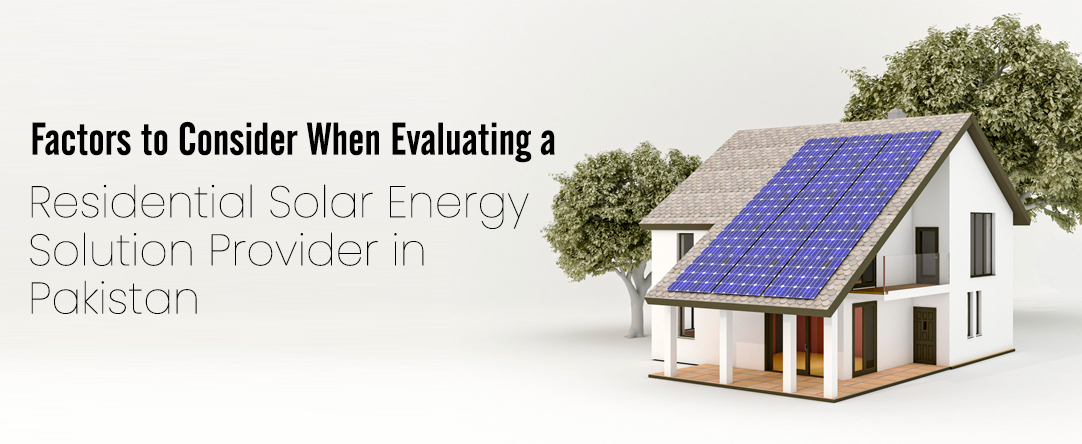
Factors to Consider When Evaluating a Residential Solar Energy Solution Provider in Pakistan
January 19, 2023
Finding the best solar panel for your home requires careful consideration of factors such as climate, size of the house, available installation space, and, most importantly, load calculations. Load calculations determine how much energy your system will need to power all the appliances you use in your home. With this information, you can decide which type of solar panel is right for you and ensure that it will meet your needs.
Finding the Optimal Solar System
Investing in a solar system is an effective way to cut electricity bills and improve home energy efficiency. Maxpower offers a wide range of solar systems and panels tailored for homes and commercial setups. Key considerations include:
-
Selecting Solar Panels: Evaluate efficiency ratings (measured in watts and conversion percentage), physical panel dimensions, and payback periods. High-efficiency monocrystalline solar panels yield more power in limited roof spaces.
-
System Sizing: Property size and daily peak sunlight exposure dictate overall system capacity. Compare prices across various configurations to secure optimal ROI.
-
System Longevity & Maintenance: Check product warranties, maintenance prerequisites, and installation requirements.
Taking time to review these elements ensures a seamless transition to clean energy.
Understanding Load Calculations
Load calculations measure the exact electrical output a solar system must generate to satisfy a property’s daily consumption. This calculation accounts for heavy appliances (air conditioners, refrigerators, water pumps), lighting, and heating/cooling systems.
A precise load calculation prevents under-sizing your setup. You can explore equipment combinations using the Maxpower Solar Inverters Catalog.
How to Calculate Your Home’s Load
-
Itemize Wattage: List every electrical fixture alongside its power rating in watts and daily operating hours.
-
Determine Daily kWh: Multiply total watts by running hours to compute daily kilowatt-hour ($\text{kWh}$) consumption.
-
Factor in Surge & Inefficiencies: Add a margin (typically 15–20%) to account for startup surges from inductive loads (motors, compressors) and inverter conversion losses.
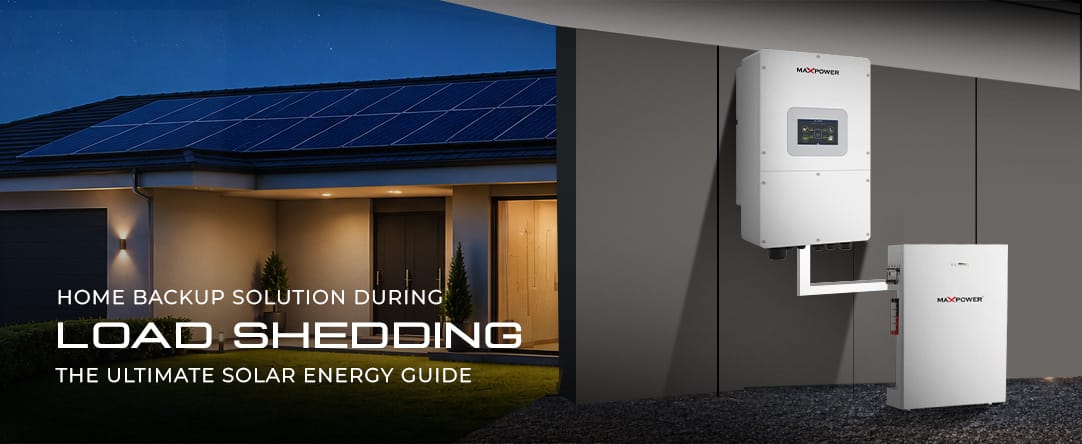
Once total energy demand is established, pair your load profile with appropriate battery backup—such as lithium solar batteries for home use—to maintain uninterrupted power during load-shedding.
5 Tips for Choosing the Best Solar Panels
-
Determine Your Energy Needs: Accurately calculate appliance wattage to determine system scale (e.g., 5 kW vs. 10 kW).
-
Ensure Site Readiness: Verify roof structural integrity and ensure the site is clear of shading obstructions.
-
Research Grid & Incentive Regulations: Learn about local net-metering policies to monetize surplus production. Read our detailed guide on the Net Metering Application Process in Pakistan.
-
Prioritize High-Efficiency Hardware: Select Tier-1 modules featuring extended linear performance warranties.
-
Opt for Professional Installation: Certified installers optimize panel tilt angles, cable sizing, and protective grounding to ensure peak performance.
Frequently Asked Questions
How do I perform a load calculation for air conditioners during peak summer?
Calculate the running wattage of your inverter ACs (typically 1,500W–2,000W per 1.5-ton unit) and multiply by daily operating hours. Ensure your inverter’s surge capacity can handle startup current spikes.
What size solar inverter do I need based on my load calculation?
Your inverter’s continuous AC rating should equal or slightly exceed your maximum simultaneous running load. For instance, if your peak load is 4.5 kW, a 5 kW or 6 kW hybrid inverter (like the Maxpower Suntronic or Voltas series) is recommended.
Does net metering eliminate the need for battery storage?
Net metering offsets grid power consumption through billing credits. However, in areas with frequent grid outages, combining net metering with a hybrid inverter and lithium battery bank ensures uninterrupted backup.
How does shading impact solar panel yield?
Shading on even a single cell can drop output across an entire string. Using panels with half-cut cell technology or dual MPPT hybrid inverters mitigates shading losses across mixed roof orientations.