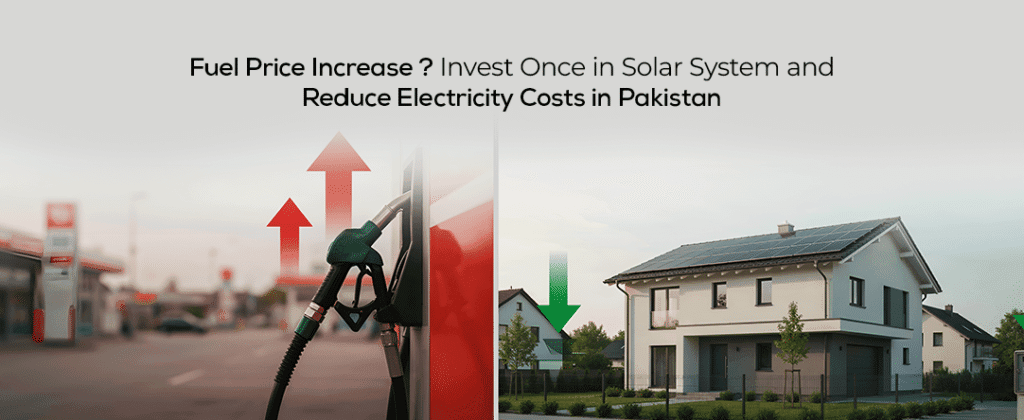
How to Choose the Right Hybrid Solar Inverter for Your Home or Business in Pakistan
February 10, 2026
Things to Consider Before Buying Solar Panels in Pakistan
February 20, 2025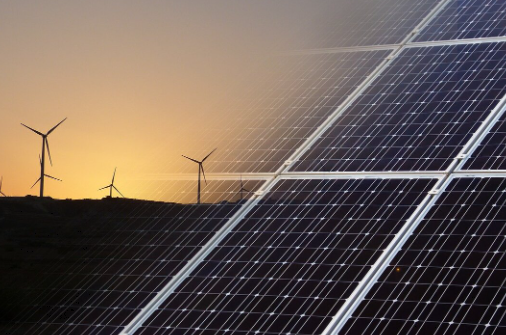
Blessed with over 300 days of annual sunshine and an average solar radiation of $5 \text{ to } 6 \text{ kWh/m}^2$, Pakistan holds immense potential for solar energy adoption. Transitioning from fossil fuel dependence to clean photovoltaic (PV) power addresses pressing economic, environmental, and infrastructure challenges.
Core Drivers of Pakistan’s Solar Transition
1. Reducing National Energy Dependency
Pakistan’s reliance on imported coal and natural gas leaves the power sector vulnerable to global market volatility. Decentralized rooftop solar installations directly offset fuel imports, strengthening national energy security and economic stability.
2. Economic Growth and Local Job Creation
The solar sector creates skilled employment in system engineering, panel installation, equipment maintenance, and distributed network management. Expanding local supply chains for mounting structures, distribution hardware, and solar components fuels regional economic growth.
3. Climate Mitigation and Environmental Protection
As a nation highly vulnerable to climate hazards, adopting clean solar technology directly cuts greenhouse gas emissions. Solar generation eliminates air pollutants associated with thermal power plants, improving urban air quality.
4. Energy Access for Remote & Off-Grid Communities
Underdeveloped transmission networks leave many rural regions with unreliable grid access. Standalone off-grid PV systems and agricultural solar water pumps deliver dependable power for rural schools, healthcare centers, and irrigation tube wells without costly grid expansion.
5. Cost Savings & Safeguard Against Tariff Hikes
Rising utility rates make self-generated solar power a cost-effective alternative. Modern PV modules and long-life Lithium Iron Phosphate ($\text{LiFePO}_4$) batteries allow residential and commercial users to secure fixed, low energy costs for over two decades.
Macro Infrastructure Impact
| Development Area | Operational Impact | Future Outlook |
| Grid Stability | Reduces peak daytime load on utility networks | Decentralized micro-grids reduce load-shedding |
| Resource Conservation | Operates with zero water consumption | Conserves vital water resources during drought |
| Technological Growth | Integrates smart MPPT tracking & hybrid inverters | Enables automated demand-side management |
| Policy Incentives | Supported by net-metering & renewable targets | Expands access to green financing options |
High-Efficiency Hardware Solutions by Maxpower
Maximizing energy yield under demanding ambient conditions requires deploying climate-resilient hardware specifically engineered for local grid stability. Systems available through maxellpower.com provide robust performance:
-
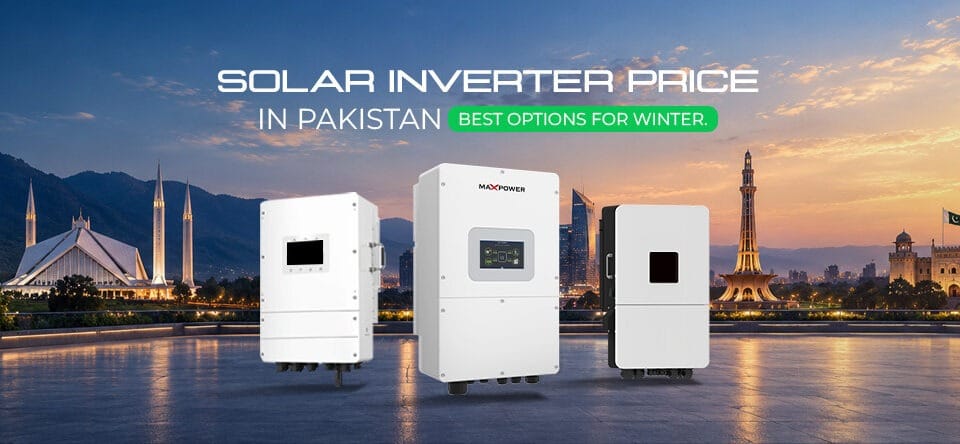
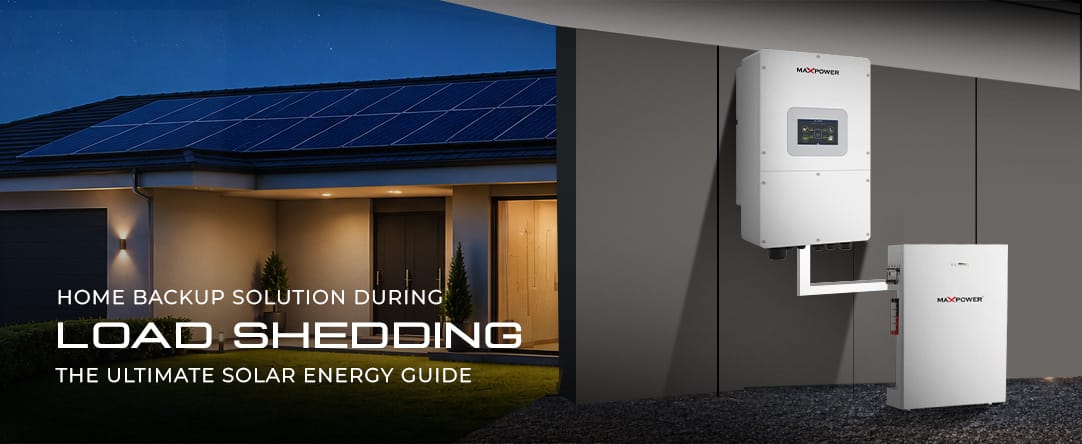
Hybrid Inverter Architecture: Advanced models like the Maxpower PV Tech 5000 (3.6 kW rated output with 5000W PV input) and the weatherproof Voltas HYD Series (IP66) offer wide MPPT voltage ranges and rapid 10 ms transfer times during grid outages.
-
Advanced Battery Storage: Deep-cycle Maxpower MP-5000 Alpha Lithium Batteries feature smart BMS protection, high depth of discharge (DoD), and 6,000+ cycle life to guarantee reliable night backup.
-
High-Efficiency PV Modules: High-wattage solar panels designed to minimize thermal loss and maintain optimal yield in extreme heat.
To evaluate system sizing and net metering procedures, explore technical guides on choosing the best solar inverter for residential setups and net metering in Pakistan. Access complete product specifications on the official Maxpower Solar Catalog.
Frequently Asked Questions
Why is Pakistan ideal for solar energy deployment?
Pakistan receives over 300 days of sunshine annually with high solar irradiance ($5\text{–}6 \text{ kWh/m}^2/\text{day}$), creating ideal conditions for maximum PV energy generation.
How does a hybrid inverter assist during load shedding?
A hybrid inverter intelligently manages grid power, solar input, and battery storage. During an outage, it switches loads to battery power in under 10 milliseconds without interrupting connected appliances.
What are the primary advantages of lithium solar batteries over lead-acid?
Lithium ($\text{LiFePO}_4$) batteries offer longer operational life (10+ years vs. 2–3 years), higher depth of discharge (up to 90%), faster charging speeds, zero maintenance, and a compact physical footprint.
Can off-grid solar systems run agricultural tube wells?
Yes. Dedicated solar water pumping systems utilize Variable Frequency Drives (VFDs) to run agricultural motor pumps directly from PV arrays during daylight hours, reducing diesel fuel expenses.
How does net metering lower monthly utility bills?
Bi-directional net metering allows you to export excess daytime solar power back to the national grid. The exported units earn credits that offset electricity imported from the utility company at night.