PV Tech Hybrid Inverters vs Traditional UPS: A Full Comparison for Pakistani Homes
August 7, 2026
Best Lithium-Ion Batteries in Pakistan for Homes and Solar Systems: The Max Power MP Series
July 17, 2026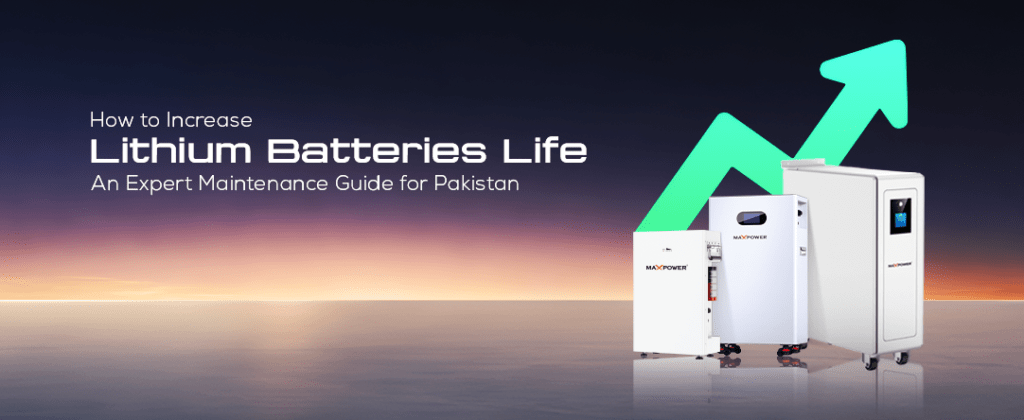
Lithium batteries are sold as maintenance-free, and in the chemical sense, they are. There is no water to top up, no acid to check, and no sulfation to prevent. But maintenance-free does not mean ignoring entirely. The habits around how a lithium battery is installed, operated, and monitored determine whether it performs at its rated 8,000 cycles or begins showing capacity decline at 2,000.
In Pakistan’s climate and load-shedding context, these habits matter more than the specifications suggest because Pakistani batteries cycle harder, run hotter, and face grid conditions that most battery manufacturers do not test for. This guide covers every practical step that extends lithium battery lifespan in a Pakistani solar setup.
Control the Installation Temperature
This Is the Single Most Important Factor
LiFePO4 batteries are thermally stable compared to other lithium chemistries, but sustained operation at high ambient temperatures accelerates cell aging. The calendar aging rate of lithium cells roughly doubles for every 10°C increase above 25°C. A battery installed in a utility room where summer temperatures reach 45°C is aging at approximately four times the rate of one installed in a climate-controlled space.
Practical steps:
- Install the battery away from direct sunlight and exterior walls that absorb heat
- Ensure the installation space has adequate passive ventilation or a small circulation fan
- Do not stack equipment against the battery enclosure
- Measure the temperature in your installation space during July and August before confirming the location
For batteries installed outdoors or in semi-covered spaces, confirm the IP rating covers the installation environment. Max Power’s MP series batteries are IP20 rated, designed for clean, enclosed indoor installation.
Set the Correct Inverter Charge Profile From Day One
Wrong Settings Silently Damage Lithium Cells on Every Cycle
This is the most common preventable cause of early lithium battery failure in Pakistan. Inverters installed with lead-acid default settings continue charging at incorrect voltage levels for lithium chemistry. LiFePO4 cells have a narrow acceptable charge voltage window. Chronic overcharge, even by a small margin, causes electrolyte decomposition. Chronic undercharge causes capacity fade.
When any battery from Max Power’s MP series is installed, the inverter must be switched to a LiFePO4 or lithium battery profile with the correct absorption voltage, float voltage, and charge current limit. If you are unsure whether your inverter settings are correct, consult Max Power’s technical team.
Avoid Regular Deep Discharge to BMS cutoff.
BMS Protection Is a Safety Net, Not a Daily Operating Point
Every lithium battery has a BMS that cuts off discharge when the state of charge reaches its minimum threshold, typically 10% to 20% of capacity. Regularly triggering this cutoff puts the battery at the lower edge of its designed operating range on every cycle.
Batteries that are regularly cycled between a 20% and 90% state of charge rather than 10% and 100% accumulate fewer cell stress events per cycle and age more slowly. If your system is regularly hitting BMS cutoff before the grid returns, your battery is undersized for your load. Review your backup capacity against the calculation method in the backup time guide.
Recharge Completely After Each Deep Cycle
Partial State of Charge Is Harder on Lithium Than You Expect
LiFePO4 does not suffer from the memory effect that affects older battery chemistries. But allowing the battery to sit at a partial state of charge for extended periods, particularly at below 20%, causes lithium plating on the anode over time, which is a degradation mechanism. Ensure your solar system is sized to fully recharge the battery on a typical clear day before the next discharge cycle.
If your panel capacity is insufficient to recharge the battery during winter months when daylight hours are shorter, configure the inverter to supplement with grid charging during off-peak hours to ensure the battery starts each evening at or near full charge.
Check Physical Connections Annually
Loose Terminals Are a Hidden Degradation Source
Battery terminal connections that work loose over time create resistance at the joint. That resistance generates heat during every charge and discharge cycle. The heat accumulates in the cable insulation and, in severe cases, at the battery terminal itself. An annual check of all terminal tightness, cable condition, and any signs of heat discoloration near connections takes five minutes and prevents a real failure pathway.
During the annual check, also inspect the installation space for any changes in ventilation, new heat sources added nearby, or moisture exposure that was not present at installation.
Monitor Performance Data Regularly
Your battery tells you what is happening if you watch.
MaxPower’s MP series batteries include built-in Bluetooth and WiFi monitoring that provides real-time state of charge, charge and discharge current, temperature, and cumulative cycle count. Spending two minutes each week checking these figures creates a performance baseline. A gradual reduction in morning state of charge at the same time each day is useful diagnostic information. An abrupt change in observed capacity is a signal for investigation.
If your battery’s monitoring shows temperatures consistently above 40°C, charging currents significantly below what the inverter should be providing, or state-of-charge readings that do not match what you observe in backup time, these are actionable signals, not background noise.
Storage State of Charge for Seasonal or Inactive Systems
Do Not Leave Fully Charged or Fully Discharged for Extended Periods
If your solar system will be inactive for an extended period, such as a vacant property or seasonal use, the battery should be stored at a 40% to 60% state of charge. Storing fully charged causes cathode stress. Storing fully discharged risks cell damage from over-discharge during the storage period. Configure the inverter to maintain the battery at mid-range before leaving the system inactive.
Frequently Asked Questions
How long should a lithium battery last in Pakistan under daily cycling?
A quality LiFePO4 battery rated at 8,000 cycles at 80% depth of discharge lasts approximately 21 years at one cycle per day under standard conditions. In Pakistan’s real-world operating conditions, including summer heat and daily deep cycling, a realistic lifespan expectation is 12 to 15 years before significant capacity reduction begins.
Does heat affect lithium battery lifespan in Pakistan?
Yes, meaningfully. Lithium cell aging accelerates at higher temperatures. A battery operating at 45°C ambient ages at approximately four times the rate of one at 25°C. Ensuring adequate ventilation in the installation space is the single most effective maintenance step for Pakistani climate conditions.
What inverter settings are correct for a LiFePO4 battery?
The inverter should be set to a LiFePO₄ or lithium battery profile with absorption voltage at 58.4V for a 48V system, float voltage at 53.6V, and charge current within the battery’s rated maximum.
Is it bad to leave a lithium battery at 100% charge overnight?
Occasionally charging to 100% is normal and does not cause immediate harm. Consistently floating at 100% for extended periods accelerates cathode stress over time. Most modern hybrid inverters, including Max Power’s Voltas range, automatically switch to a lower float voltage after reaching full charge, which mitigates this effect in normal daily operation.
Can I extend my battery’s lifespan by cycling it less deeply?
Yes. Batteries cycled between 20% and 80% state of charge rather than 0% to 100% accumulate less cell stress per cycle and can exceed their rated cycle count significantly. If your load-shedding backup requirement does not require full depth cycling, configuring the inverter’s discharge depth to 80% rather than 100% is a worthwhile longevity measure.
Is Your Lithium Battery Getting the Care That Protects Your Investment?
The steps above take minutes per year to apply correctly, and they meaningfully extend the period before any lithium battery requires replacement. A battery that receives correct installation, proper inverter settings, and adequate temperature management consistently outperforms its rated cycle life rather than falling short of it.
Schedule a call with us to confirm your current inverter settings and discuss battery placement today across Pakistan.