Lithium vs Tubular Batteries: Which One Actually Saves More Money in Pakistan?
July 29, 2026
How to Increase Lithium Battery Life: An Expert Maintenance Guide for Pakistan
July 22, 2026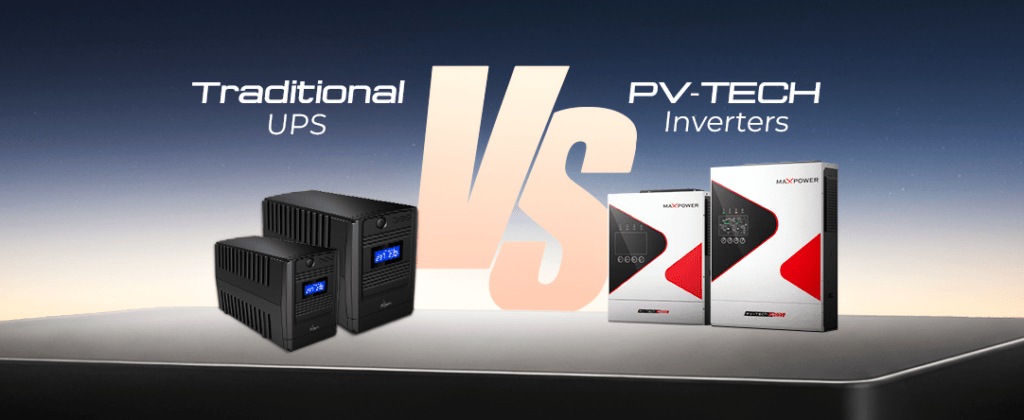
Most Pakistani homes already have a UPS. It was the first solution to load shedding, and for millions of households, it is still running alongside a recently added solar system. The question that comes up regularly when homeowners consider upgrading is whether a hybrid solar inverter like Max Power’s PV Tech series genuinely replaces the UPS or whether both serve different purposes.
The answer depends on what you actually need each device to do. This comparison walks through the real differences across eight criteria that matter for Pakistani home users.
What Each Device Actually Does
A traditional UPS is designed for very short-duration power backup, typically 10 to 30 minutes for a connected load, during brief grid interruptions. It charges from the grid, stores energy in a lead-acid battery bank, and delivers it back when the grid fails. It has no solar input, no solar charging capability, and no ability to reduce your electricity bill. It is a backup device, not an energy management device.
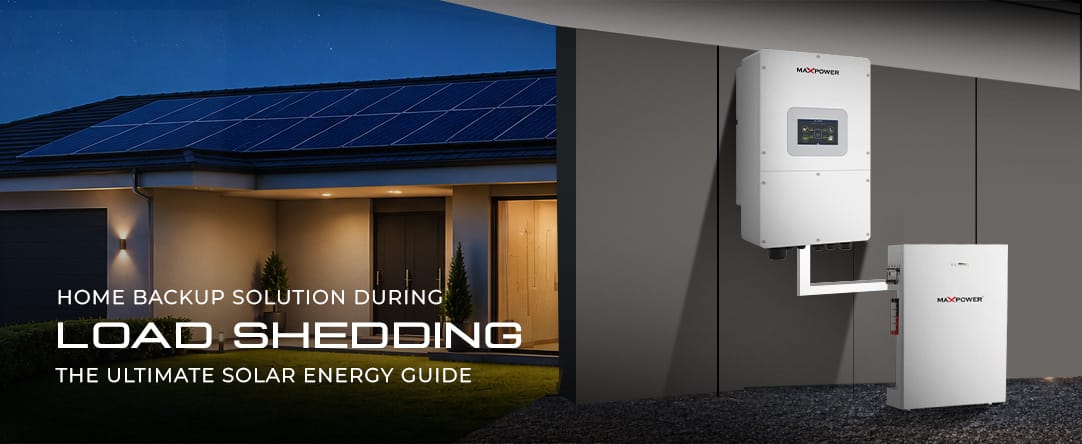
A PV Tech hybrid solar inverter manages three energy sources simultaneously: solar panels, battery storage, and the grid. It generates electricity from panels during daylight, charges batteries from solar, powers your loads, and seamlessly switches to battery when the grid fails. It actively reduces your electricity bill during the day and provides backup during load shedding. It is both an energy generation management device and a backup device.
Comparison Across Eight Criteria
1. Backup Duration During Load Shedding
A traditional UPS paired with a 200Ah tubular battery bank delivers 1 to 3 hours of backup for typical household loads at 50% usable depth. It cannot be recharged from solar and depends entirely on grid availability to recharge.
The PV Tech hybrid inverter paired with Max Power’s MP-10000 Alpha provides 4 to 6 hours of backup for a typical household load and recharges from solar panels during the day, meaning each evening starts with a full battery regardless of grid availability during daylight hours.
2. Electricity Bill Impact
A UPS has zero impact on your electricity bill. It charges from the grid and returns that stored energy. The round-trip efficiency of a lead-acid UPS battery at 75% to 80% means you actually pay slightly more for the energy the UPS delivers than what you directly consumed, accounting for conversion losses.
The PV Tech hybrid inverter with a solar panel array reduces your grid consumption by generating free solar energy during daylight hours. A well-sized 5 kW to 6 kW solar system in Pakistan saves PKR 1,000 to PKR 1,500 per day at current NEPRA tariff rates. Over a year, that is PKR 365,000 to PKR 547,500 in bill reduction.
3. Solar Integration
A traditional UPS cannot integrate with solar panels. There is no solar input, no MPPT charging circuit, and no way to use solar generation for loads or battery charging.
The PV Tech series is built around solar integration. Its MPPT solar charge controller optimizes energy harvest from the panel array throughout the day, powering loads directly from solar during generation hours and storing surplus in the battery for evening use.
4. Transfer Time During Grid Failure
Most traditional UPS units switch to battery power in 10 to 30 milliseconds depending on the model and sensing circuit design. Budget units may take longer. The PV Tech hybrid inverter achieves 10ms for sensitive loads, which is comparable to or better than quality UPS units.
For Pakistani homes where the concern is load shedding rather than microsecond power quality events, both are fast enough to prevent most appliance disruptions during grid switching.
5. Battery Chemistry Support
Traditional UPS units are designed around lead-acid batteries. Upgrading to lithium chemistry requires a UPS with lithium battery support, which is rare in Pakistan’s mainstream UPS market.
The PV Tech series supports both lead-acid and lithium-ion batteries and, when paired with Max Power’s MP series LiFePO₄ batteries, provides BMS-connected intelligent charging that extends battery life and gives accurate state-of-charge information.
6. Long-Term Cost
A quality UPS unit plus a lead-acid battery bank replaced every 2 to 3 years over a 10-year period costs PKR 150,000 to PKR 300,000 in battery replacements alone, providing zero bill reduction throughout.
A PV Tech hybrid inverter system with lithium battery storage and solar panels costs more upfront but delivers 10 years of bill reduction. At PKR 365,000 in annual savings from solar generation, the system pays for itself in 2 to 4 years and generates savings for the remaining 6 to 8 years of the panel warranty period.
7. Monitoring and Management
A traditional UPS provides basic battery level indicators and fault alerts. There is no energy monitoring, no solar generation data, and no remote access.
The PV Tech series provides real-time monitoring of solar generation, battery state, grid consumption, and load through its display and optional app connectivity when paired with MP series batteries. This gives homeowners visibility into their energy system’s daily performance.
8. Net Metering Eligibility
A UPS system cannot participate in NEPRA’s net metering program because it has no solar generation and no grid feed-in capability.
A PV Tech hybrid inverter system connected to a solar array can be configured for net metering, allowing surplus daytime solar generation to be exported to the DISCO grid and credited against nighttime consumption. This further improves the system’s financial return. Explore Max Power’s net metering solutions for details on the registration process.
Frequently Asked Questions
Can a PV Tech hybrid inverter completely replace my existing UPS?
Yes. The PV Tech hybrid inverter covers every function a traditional UPS provides, including seamless battery switching during grid failure, and adds solar generation management and bill reduction capability. The only scenario where a traditional UPS remains alongside a hybrid inverter is where a specific sensitive load requires a double-conversion UPS for power quality reasons rather than just backup.
Is the PV Tech inverter more expensive than a traditional UPS?
The PV Tech inverter plus panel array plus battery costs more than a standalone UPS with batteries. However, the hybrid system reduces your electricity bill from day one, while the UPS increases your net energy cost through conversion losses. Within 2 to 4 years, the hybrid system’s bill savings recover the additional upfront cost.
Does a PV Tech hybrid inverter work without solar panels?
Yes. A PV Tech inverter without solar panels functions as an advanced UPS, managing battery charging from the grid and providing backup during outages. Without panels, you do not get solar generation or bill reduction, but you do get faster transfer time, lithium battery support, and BMS communication compared to a standard UPS.
What is the range of solar inverters available under Max Power, including Suntronic inverters?
Max Power offers a wide range of solar inverter solutions to match different residential and commercial energy needs. The portfolio typically includes smaller hybrid inverters for homes starting from low kW systems up to higher-capacity units suitable for large households. The range also includes Suntronic inverters designed for stable performance, solar integration, and reliable backup during load shedding. Both inverter lines are built to support hybrid solar systems with battery storage and grid connectivity, allowing users to scale based on their energy requirements.
Are Max Power solar inverters suitable for commercial and industrial use?
Yes. Max Power solar inverter systems, including PV Tech and Suntronic products, are widely used in commercial setups such as offices, retail outlets, schools, and small industries. For larger commercial applications, higher-capacity hybrid and three-phase configurations are available that support heavier loads, longer backup requirements, and integration with solar panels for cost optimization. These systems are designed to reduce operational electricity costs while ensuring uninterrupted power for critical business operations.
Is Your Traditional UPS Solving Load Shedding or Just Managing It?
A UPS keeps the lights on for a couple of hours. A PV Tech hybrid solar system keeps your home running through long outages while actively lowering your electricity bill every single day. The difference is not just backup; it is long-term energy control and real financial impact.
Instead of guessing the right setup, get a system designed around your actual load, usage pattern, and backup needs.
Get a personalized solar quotation today and see what your home actually needs, not what the market is trying to sell you.