A Revolutionary Solar Water Pumping Solution by Max Power That Could Change Pakistan
February 11, 2023
Advantages and Disadvantages of Solar Energy
September 3, 2020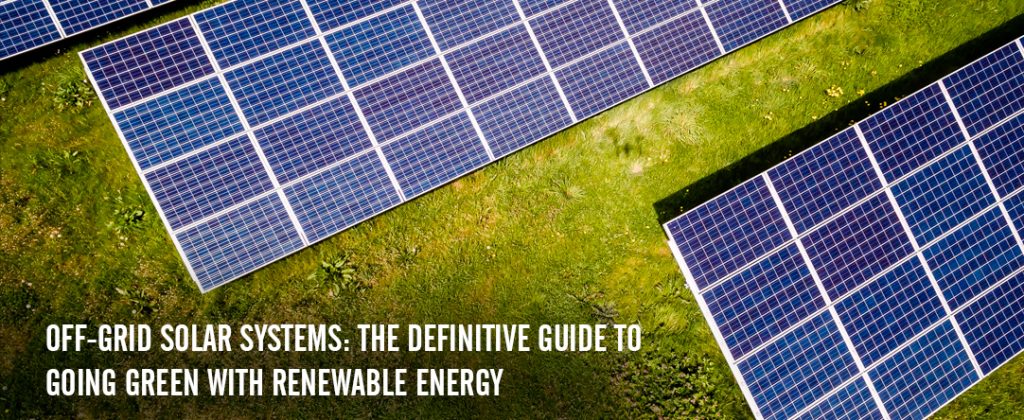
You may be interested in investing in an off‑grid solar system, but what do you need to know before taking the plunge? This blog post is here to help you make an informed decision. We’ll look at what precisely an off‑grid solar system is and why it’s an excellent choice for those wanting to go green with renewable energy. We’ll also discuss cost, installation, benefits, and more—especially in the context of Pakistan, where load shedding and power outages are common. Read on to learn everything there is to know about off‑grid solar systems and how they can benefit your home or business.
What is an off‑grid solar system?
A photovoltaic (PV) system that runs independently of the utility grid is known as an off‑grid solar system. Solar panels, one or more inverters, a battery bank, and often a charge controller make up a PV system. Off‑grid systems are typically designed to supply electricity for a specific purpose, such as powering a remote home, farmhouse, cottage, or commercial site where grid connection is unavailable or unreliable.
Off‑grid systems are typically more expensive than grid‑tied systems due to the need for additional components like batteries and sometimes a generator. However, they offer the advantage of being completely independent of the utility grid, which can be advantageous in many situations—especially in Pakistan, where load shedding, voltage fluctuations, and remote locations make reliable power a challenge. For example, if you live in an area with unreliable or nonexistent utilities or want to be prepared for a power outage, an off‑grid solar system can provide uninterrupted power.
How to Choose the Right Off‑Grid Solar System for Your Home
Choosing the right one is essential if you’re considering switching to an off‑grid solar system for your home in Pakistan. When making your decision, keep the following in mind:
1. The size of your home
An off‑grid solar system needs to be sized appropriately for the square footage of your home and your energy needs. Too small, and it won’t be able to power all of your appliances and electronics; too large, and you’ll be wasting money on a system that’s bigger than you need. Consider the number of rooms, lighting, fans, refrigerator, TV, and any air conditioning you plan to run.
2. Your energy usage
Take a look at your energy usage habits and consider what you’ll need to power with your off‑grid solar system. A smaller system will suffice if you only need essential lighting and charging for small electronics. But if you want to run larger appliances, water pumps, or even air conditioning, you’ll need a more robust setup with higher solar panel capacity and battery storage.
3. The climate where you live
The sunlight that hits your location dramatically affects how much power an off‑grid solar system can generate. If you live in an area with long, sunny days (common in many parts of Pakistan), you’ll be able to produce more electricity than somewhere with shorter days or more cloud cover. Consider average sunshine hours, seasonal variations, and shading from trees or buildings.
4. Your budget
Obviously, the cost of an off‑grid solar system will be a factor in your decision. But don’t let price be the only thing you consider—make sure you’re getting a quality product that will meet your needs. Compare solar system prices in Pakistan, warranties, and after‑sales service from reputable solar companies.
By researching and finding the right off‑grid solar system for your home, you can ensure you’re getting the most out of your investment in clean energy.
Installation and Maintenance of Off‑Grid Solar Systems
People in Pakistan are growing more and more interested in off‑grid solar systems as a method to lessen their dependency on the conventional grid and cope with load shedding. However, before enjoying the benefits of renewable energy, you must install and maintain your off‑grid solar system properly.
Follow these steps to install your off‑grid solar system:
1. Choose the right location for your panels
You’ll want to pick a spot with plenty of sunlight during the day, ideally facing south with minimal shading. If you live in a cold climate, you’ll also want to ensure that your panels are not in a shady spot that could be covered in snow or ice in winter.
2. Mount your panels on a sturdy structure
You can use brackets or rails to attach your panels to a roof, ground mount, or pole. Ensure the mount is securely attached so your panels don’t blow away in high winds or storms.
3. Connect your panels to an inverter
The DC power generated by your solar panels is converted into usable AC power by an inverter so that your appliances and lights may run on it. You’ll need to wire your inverter directly into your home’s electrical system. Choose a reliable off‑grid inverter compatible with your battery bank and load requirements.
4. Install a charge controller and battery bank
Charge controllers protect your batteries from overcharging or discharging too much power. Your solar panels’ excess energy is stored in battery banks for later use—especially important during nighttime or cloudy days. Make sure to size your charge controller and battery bank properly based on your daily energy consumption and desired backup time.
5. Connect your appliances and lights to the inverter
Now that you have a functioning off‑grid solar system, you can connect your appliances and lighting fixtures to the inverter so they will run on clean, renewable energy! Regular maintenance—such as cleaning solar panels, checking battery water levels (if lead‑acid), and inspecting connections—will help ensure long‑term performance.
Final Thoughts
Off‑grid solar systems are an excellent way to take your energy production into your own hands and start living more sustainably. With the right advice and careful research, transitioning to an off‑grid lifestyle can be one of the best decisions you make—especially in Pakistan, where load shedding, high electricity costs, and remote locations make solar power an attractive solution. Off‑grid technologies have come a long way in recent years, making them reliable and cost‑effective. If you’re looking for ways to reduce your carbon footprint, cut your electricity bills, and gain energy independence, going off the grid with a solar system could be just what you need!