Shining Bright: Optimizing Solar Panel Performance during the Summer Months
June 1, 2023
Solar Panels and Summer Savings: A Winning Combination in Pakistan
May 16, 2023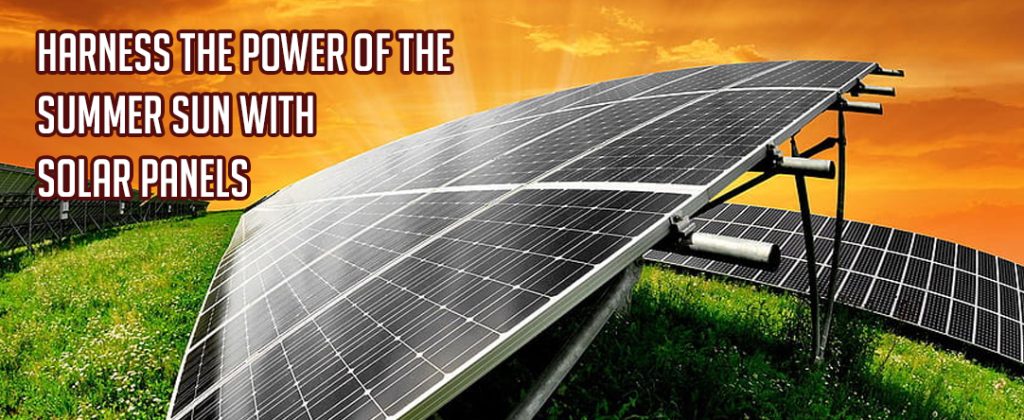
Solar panels have emerged as a key technology for generating clean energy as the globe prioritizes renewable energy sources. Photovoltaic (PV) modules convert sunlight directly into usable electricity, delivering economic relief during hot summer months when air conditioning usage drives peak load demands across distribution grids (DISCOs) like LESCO and K-Electric.
How Solar Panels Perform in Summer
Solar systems operate at high capacity during summer due to prolonged daylight hours and high solar irradiance. Since the sun sits higher in the sky, panels receive direct solar rays, maximizing daily kilowatt-hour (kWh) output.
-
Optimal Positioning & Orientation: Installing arrays on unshaded rooftops oriented south or south-west ensures maximum daily sun exposure.
-
Surface Cleaning Protocol: Airborne dust, pollen, and particulate matter accumulate rapidly in summer, forming a barrier that reduces solar absorption. Periodic washing with soft brushes and demineralized water prevents hot-spot formation and efficiency drop-offs.
-
Managing Temperature Coefficients: High surface temperatures actually decrease silicon cell efficiency. Panels lose approximately $0.35\%$ to $0.5\%$ efficiency for every degree Celsius above $25^\circ\text{C}$. Selecting high-efficiency modules with low temperature coefficients ensures sustained energy output during extreme heat waves.
For maximum module efficiency and heat resistance, explore Maxpower Monocrystalline & Bifacial Solar Panels.
Tips for Maximizing Solar Power During Summer Peak Hours
-
Shift Heavy Loads to Midday: Run high-consumption appliances like inverter air conditioners, water pumps, and laundry systems between 10:00 AM and 3:00 PM when solar production reaches its peak.
-
Deploy Smart Inverter Technology: Utilize intelligent hybrid inverters equipped with dual MPPT trackers and real-time Wi-Fi monitoring to track string performance and identify shading losses immediately. Check out the complete lineup in the Maxpower Voltas Inverters Catalog.
-
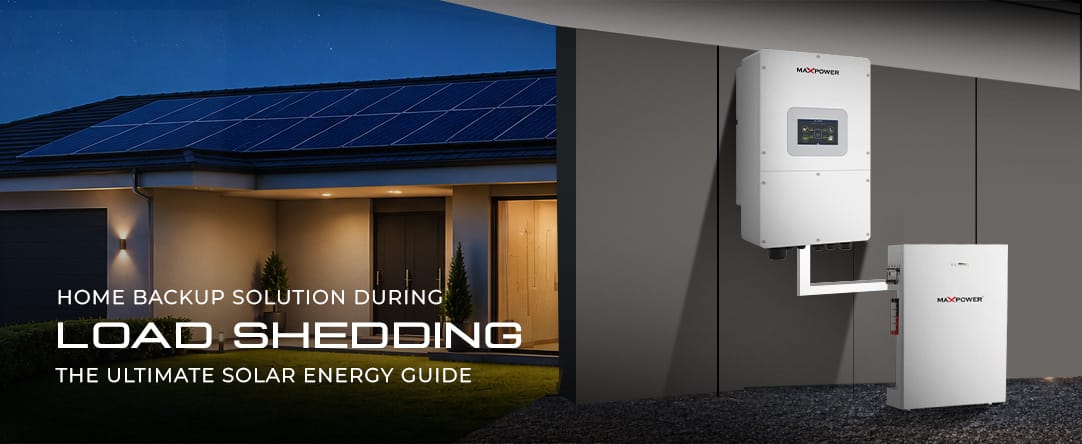
Integrate Energy Storage: Pair your array with high-density lithium storage to capture excess midday energy for nighttime load-shedding backup. Read our product breakdown on the Maxpower PRO Series Lithium Batteries.
Summer Energy Savings & Net Metering Benefits
Integrating rooftop solar eliminates dependence on expensive grid tariffs during summer peak hours. Homeowners can leverage bi-directional net metering to feed excess daytime power back to the local utility grid in exchange for billing credits.
| Solar Equipment Component | Primary Technical Advantage | Key Application / Best Use Case | Estimated Price Range (PKR) |
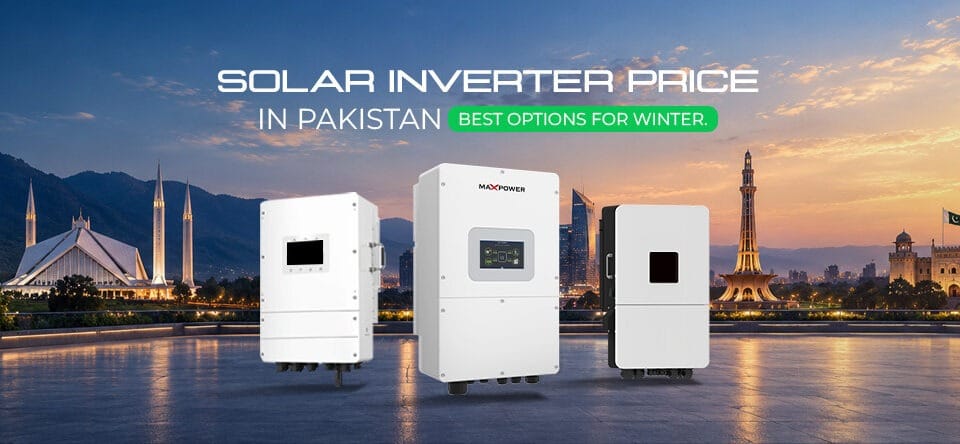
| Maxpower Suntronic 6kW Pro | Single-Phase, Pure Sine Wave, Dual MPPT | Indoor wall mount for standard 1–2 AC homes | PKR 125,000 – 168,000 |
| Maxpower Voltas HYD 6K-H8 | IP66 Weatherproof, 48V $\text{LiFePO}_4$ Ready | Exposed rooftop setups subject to dust & rain | PKR 228,000 – 248,000 |
| Maxpower Voltas HYD-12K-H6 | High-Voltage / Low-Voltage Lithium Support | Large villas, commercial setups running multiple ACs | PKR 460,000 – 475,000 |
| Maxpower PRO Series $\text{LiFePO}_4$ | BMS CAN/RS485 Communication, 6000+ Cycles | Nighttime load-shedding backup & load shifting | PKR 245,000 – 520,000 |
Before installing your array, accurately calculate your total household power consumption using the Maxpower Load Calculator Tool.
Why Maxpower is the Premier Renewable Energy Partner
Selecting robust, heat-tolerant equipment guarantees maximum return on investment. Maxpower provides complete turnkey solutions engineered specifically for harsh climatic conditions:
-
Heavy-Duty IP66 Inverters: Designed to withstand severe ambient dust, monsoon rains, and direct heat without thermal tripping.
-
BMS Lithium Storage Compatibility: Active digital communication between inverters and battery management systems ensures optimal charging profiles and long cycle life.
-
Residential & Commercial Scaling: Custom system design tailored to home solar, commercial plazas, and agricultural pumping. Learn more about Maxpower Residential Solar Solutions.
Frequently Asked Questions
How does extreme summer heat affect solar panel output?
Extreme heat slightly reduces panel efficiency due to the silicon cell temperature coefficient. However, the extended daylight hours and higher solar irradiance in summer easily outweigh this minor loss, resulting in higher overall daily energy generation.
How often should solar panels be cleaned during hot summer months in Pakistan?
In dry, dusty environments, cleaning panels every 2 to 3 weeks during early morning or late evening hours prevents airborne dust buildup from reducing system yield by 15% to 20%.
Can Maxpower hybrid inverters operate continuously during summer high ambient temperatures?
Yes. Maxpower Voltas HYD series inverters feature IP66-rated sealed weatherproof enclosures with advanced heat dissipation, allowing them to operate reliably on outdoor walls without overheating or derating.
Which Maxpower solar system size is recommended to run 2 inverter ACs in summer?
A 6kW system paired with a Maxpower Voltas HYD 6K-H8 inverter and a 540W–600W panel array reliably powers 2 inverter ACs alongside routine household electrical loads during daytime hours.
How does net metering reduce summer electricity bills in Pakistan?
Net metering exports excess electricity generated by your rooftop solar system back to your local DISCO (e.g., LESCO, K-Electric) during sunny daytime hours. These exported units earn financial credits that offset your nighttime grid consumption.