Top 5 Best Solar Inverters for Residential Use
July 17, 2021
Effective Ways to Improve Solar Panel Efficiency
July 24, 2021
How to Buy the Best Solar Inverter for Residential Use
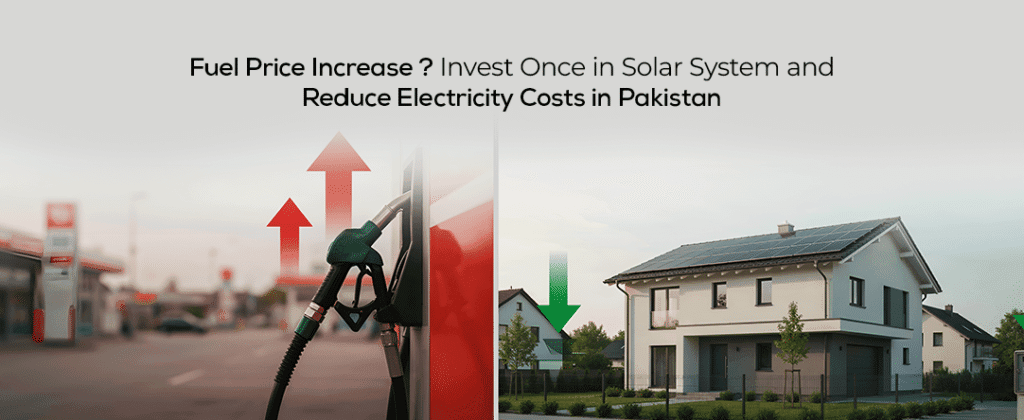
High electricity bills place a heavy financial burden on households, especially during peak summer and winter usage. To manage these costs, homeowners must either reduce consumption or generate their own clean energy. While energy conservation helps, installing a self-sustained solar power system provides long-term financial relief by eliminating reliance on expensive grid electricity.
In any solar setup, the solar inverter is the most critical component—it acts as the brain of the system, converting Direct Current (DC) generated by solar panels into usable Alternating Current (AC) for household appliances. Choosing the right solar inverter ensures maximum operational efficiency and long-term utility savings.
How Solar Inverters Work
Before selecting a specific inverter model, it is essential to understand its core function:
-
DC Generation: Photovoltaic (PV) solar panels absorb sunlight photons and convert them into Direct Current (DC) electricity.
-
Inversion Process: Standard residential appliances cannot run directly on DC power. The solar inverter converts DC energy into stable Alternating Current (AC).
-
Power Routing: The inverter routes AC power directly to home appliances, sends excess power to energy storage batteries, or exports surplus power back to the national grid via net metering.
Key Features to Check Before Buying a Solar Inverter
Selecting the right inverter requires evaluating wave types, load capacities, protective features, and operational mechanisms tailored to your site conditions.
1. Inverter Output Wave Type
The output waveform determines how smoothly household electronics operate:
-
Pure Sine Wave Inverters: The most reliable and efficient inverter category. They output clean AC power identical to (or better than) grid electricity, ensuring silent and efficient operation for sensitive electronics, fridges, and inverter ACs. Modern systems utilize pure sine wave tech. Discover top-rated options among high-efficiency Maxpower solar inverters.
-
Square Wave Inverters: Often referred to as basic digital inverters. While cheap, they produce harsh output waves that cause humming noises and potential overheating in modern motors and appliances.
-
Modified / Stepped Wave Inverters: A hybrid option between square and sine wave designs. Suitable for simple resistive loads or small electronic gadgets, but not recommended for heavy inductive residential loads.
Solar Inverter Operational Types: Off-Grid vs. On-Grid vs. Hybrid
| Inverter Type | Energy Storage | Net Metering / Grid Export | Operational Behavior During Outages |
| Off-Grid Inverter | Connected to Battery Banks | No | Powers appliances using stored battery energy during load shedding. |
| On-Grid Inverter | No Batteries | Yes (Feed-in Tariffs) | Shuts down during power outages for safety (anti-islanding protection). |
| Hybrid Inverter | Connected to Batteries | Yes (Net Metering Supported) | Blends grid, solar, and battery power for non-stop back-up & grid exports. |
How to Calculate Residential Power Requirements
To determine required inverter capacity, calculate the total peak wattage of all appliances you intend to run simultaneously.
Standard Household Appliance Power Chart
-
Ceiling Fan: 50W – 75W
-
LED TV (32″–55″): 80W – 150W
-
Laptop / Computer: 50W – 150W
-
Refrigerator / Freezer: 160W – 300W (Running)
-
Inverter Air Conditioner (1.5 Ton): 1,200W – 1,800W
-
LED Tube Light / Bulb: 18W – 40W
Calculating Total Load & Inverter Sizing
-
Sum Simultaneous Wattage: Add up running wattages for all essential appliances.
-
Account for Inrush / Starting Surge: Inductive loads (refrigerators, water pumps, air conditioners) require 2x to 3x their running wattage for a brief split-second during compressor startup.
-
Size the Inverter: If your estimated peak simultaneous load is 3,600W, choose an inverter rated for at least 4,000W to 5,000W (4kW–5kW) to comfortably handle starting surges without tripping.
To learn more about sizing solar arrays and evaluating site readiness, read our detailed guide on evaluating solar panel efficiency and feasibility in Pakistan.
Recommended Inverter Models for Residential & Commercial Use
Choosing a reliable brand guarantees high MPPT conversion efficiency and long-term durability:
-
Off-Grid Solutions: Ideal for remote areas with frequent power outages. Models like the Sunbridge 4000 and Sunbridge 8000 provide dependable standalone performance.
-
On-Grid & Net Metering Solutions: Perfect for urban areas looking to reduce electricity bills through net metering credits. Multi-phase models such as the Suntrio Plus 5K and Suntrio Plus 10K Three-Phase export surplus power seamlessly.
-
Hybrid Storage Solutions: Pairing high-capacity inverters with reliable lithium LiFePO4 batteries guarantees uninterrupted power during night-time hours and sudden grid blackouts.
Explore additional optimization strategies in our previous guides on maximizing solar panel performance in winter, solar auto irrigation systems, and beating the summer heat with solar power. Explore full product specifications on the official Maxpower Blog.
Frequently Asked Questions
What is the difference between an On-Grid and an Off-Grid solar inverter?
An On-Grid solar inverter feeds excess electricity directly into the national grid via net metering, but does not support batteries. An Off-Grid inverter stores excess energy in battery banks to provide backup during load shedding, but cannot export electricity back to the utility company.
What size solar inverter do I need for a 1.5 Ton Inverter AC?
A 1.5 Ton Inverter AC draws roughly 1,200W to 1,800W while running. To operate an AC alongside standard household appliances (fans, lights, fridge, TV), a minimum 5 kW solar inverter system is recommended.
Can a solar inverter run without batteries?
Yes, On-Grid inverters operate completely without batteries. Hybrid inverters can also power loads during daylight hours directly from solar panels without batteries, provided grid power is present. However, adding batteries ensures backup power during grid blackouts.
Why does my inverter trip when heavy appliances start up?
Heavy motor-driven appliances like water pumps and fridges draw a high “starting surge” current when powering on. If the combined startup surge exceeds your inverter’s maximum surge rating, the safety breaker trips.
What is MPPT efficiency in modern solar inverters?
Maximum Power Point Tracking (MPPT) is an advanced technology inside modern solar inverters that continuously optimizes voltage and current levels from solar panels, ensuring maximum power extraction even during cloudy or low-light conditions.