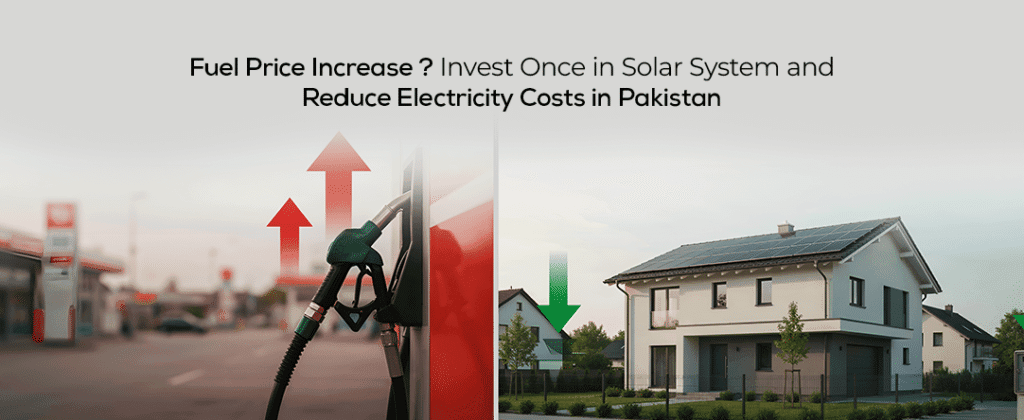
Solar Panels: A Solution to Pakistan’s High Electricity Bills and Inflation
September 7, 2023
The Positive Environmental Impact of Adopting Solar Panels
September 4, 2023
Solar energy is rapidly becoming one of the most important renewable energy sources in Pakistan and around the world. With rising electricity prices, increasing load shedding, and growing environmental concerns, more homeowners and businesses are switching to solar panels and solar energy systems.
Pakistan is blessed with abundant sunlight throughout the year, making solar power an ideal solution for residential, commercial, and industrial energy needs. From solar panels and solar inverters to lithium batteries and energy storage systems, solar technology is transforming the country’s energy future.
10 Surprising Facts About Solar Energy
Fact 1: Solar Energy Is Practically Unlimited
The sun delivers enough energy to Earth every hour to meet global energy requirements for an entire year. By installing solar panels and solar inverters, homes and businesses can tap into this sustainable energy source.
Fact 2: Solar Technology Has Been Around for Decades
Although solar energy feels like a modern trend, the first commercial solar cell was introduced in 1954. Over the last 60+ years, photovoltaic panels have evolved dramatically in conversion efficiency, heat tolerance, and physical durability.
Fact 3: The Discovery Dates Back to 1839
The photovoltaic effect—the fundamental process of converting light directly into electricity—was first observed by Edmond Becquerel in 1839. This scientific breakthrough paved the way for modern silicon cell fabrication.
Fact 4: Solar Panels Work Even on Cloudy Days
Solar panels do not require direct, unshaded sunlight to produce power. They capture diffuse solar irradiance during overcast or hazy weather. Integrated Maximum Power Point Tracking (MPPT) inverters optimize voltage levels to harvest maximum available energy under low-light conditions.
Fact 5: Solar Panels Can Be Installed Almost Anywhere
Photovoltaic arrays offer modular flexibility and can be installed across a wide range of surfaces:
-
Residential rooftops
-
Commercial & industrial building roofs
-
Ground-mounted open fields
-
Agricultural tubewell sites
-
Elevated shade structures and carports
Fact 6: Solar Energy Provides Long-Term Savings
Solar power installations offer significant financial benefits by lowering reliance on expensive utility tariffs. To estimate system sizing and expected returns, explore our Electric Load Calculator.
Fact 7: Solar Increases Property Value
Properties outfitted with solar arrays and backup storage command higher market valuation. Buyers value lower operating costs, instant backup during load shedding, and overall energy independence.
Fact 8: Solar Energy Is Environmentally Friendly
Solar generation produces clean electricity without carbon emissions or toxic combustion byproducts, supporting national environmental goals and air quality preservation.
Fact 9: Solar Systems Are Becoming More Affordable
Technological advancements and economies of scale have significantly lowered the cost per watt of solar modules, hybrid inverters, and lithium energy storage, shortening payback periods.
Fact 10: Solar Energy Creates a Sustainable Future
Adopting solar reduces greenhouse gas emissions, stabilizes energy infrastructure, and moves the grid toward clean, self-sustaining energy generation.
Why Choose Maxpower for Solar Solutions in Pakistan?
When evaluating solar providers in Pakistan, Maxpower delivers complete, end-to-end solar solutions:
-
Advanced Solar Technology: Premium hardware including monocrystalline solar panels, high-efficiency hybrid solar inverters, and long-life $\text{LiFePO}_4$ storage engineered for local weather extremes.
-
Tailored System Engineering: Custom-sized packages designed for residential, commercial, industrial, and agricultural pumping needs.
-
Net-Metering Expertise: Full guidance and compliance support for exporting surplus power to utility providers. Read our step-by-step guide on the Net Metering Application Process in Pakistan.
-
Energy Storage Integration: Storage systems paired with modern lithium banks. Learn more in our article on lithium solar batteries for home backup.
Frequently Asked Questions
How do solar panels generate electricity on hazy or overcast days?
Solar panels absorb both direct photons and diffuse sunlight scattered by clouds. While peak generation occurs in direct sun, modern half-cut cell modules maintain functional power output during overcast weather.
What is the typical payback period for a residential solar system in Pakistan?
Given current electricity tariffs and continuous fuel adjustments, a standard residential hybrid solar system typically pays for itself within 2.5 to 4 years through reduced energy bills.
Can a hybrid solar inverter work without a battery connection?
Yes, most hybrid solar inverters can operate in on-grid mode to power home loads and export excess energy without a battery. However, adding a battery ensures backup power during grid blackouts.
How long do modern monocrystalline solar panels last?
Tier-1 monocrystalline panels come with a 25-year performance warranty and generally retain over 80% of their output capacity after 25 to 30 years of operation.