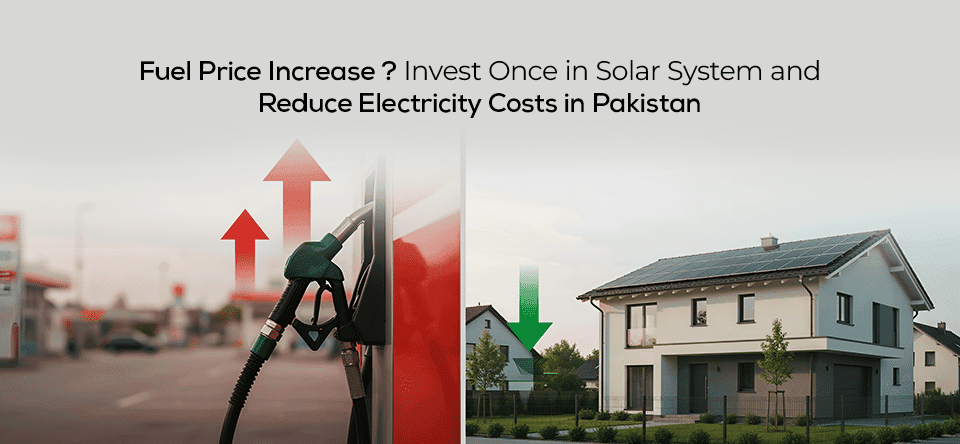
Fuel Price Increase? Invest Once in Solar System and Reduce Electricity Costs in Pakistan
September 25, 2026Why Winter Changes Everything for Your Solar Inverter Choice
Winter in Pakistan brings a unique set of energy challenges that make your choice of solar inverter more important than at any other time of year. As temperatures drop across Lahore, Islamabad, Gujranwala, and Karachi, households shift from running ceiling fans to powering electric heaters, irons, water pumps, and closed-loop heating systems. This sudden spike in heating-related load coincides with shorter daylight hours, morning fog in central Punjab, and increased load shedding in many urban and rural areas. A solar system that performed perfectly during long summer days may struggle to keep up if the inverter is undersized, lacks battery compatibility, or cannot efficiently harvest energy during low-light winter mornings.
Understanding the current solar inverter price in Pakistan for 2026, and knowing which features matter most for cold-weather performance, helps you avoid costly mistakes. This guide explains how winter affects solar generation, what capacity and specifications you should prioritize, and how to select a hybrid solar inverter that delivers reliable backup and maximum savings during Pakistan’s most demanding season.
Many people assume that solar technology only works in intense summer heat. In reality, solar panels actually become more electrically efficient in cooler temperatures because excessive heat reduces voltage output. However, winter brings shorter days, a lower sun angle, and atmospheric challenges like smog in Lahore, fog in northern Punjab, and dust accumulation that can coat rooftop modules for weeks without rain. These factors reduce the total window of time your system has to generate power, which means your solar inverter must be exceptionally efficient at converting every available watt during limited sunlight hours.
Morning fog and haze also push your array to work at lower voltages and currents during the first few hours of the day. A basic inverter without a wide maximum power point tracking range or multiple MPPT channels may fail to start until the sun is high, effectively wasting the most productive part of a short winter day. Additionally, winter heating loads such as electric room heaters, geysers, and additional lighting create sudden power surges that a standard inverter may not handle gracefully. If your system is not designed for these seasonal realities, you will find yourself relying on expensive grid imports or noisy generators precisely when your solar energy investment should be saving you the most money.
The solar inverter price in Pakistan in 2026 reflects a market that has matured significantly. After years of currency fluctuation and supply chain adjustments, prices have stabilized into clear tiers based on capacity, technology, and warranty support. For homeowners planning a winter-ready installation, it helps to understand where quality equipment sits within the current pricing landscape.
Entry-level single-phase inverters suitable for small homes and basic backup needs typically remain accessible at lower price points, though these units often lack the wide PV input ranges and lithium communication protocols needed for serious winter performance. Mid-range hybrid solar inverters in the three to five kilowatt range, which are ideal for standard Pakistani homes running lights, fans, a few heaters, and essential appliances, generally fall into a moderate price bracket that balances features with affordability. These units usually offer dual MPPT inputs, generator support, and basic battery management.
For larger homes, multi-story villas, and small commercial setups that need to run multiple air conditioners or electric heating systems alongside regular appliances, heavy-duty five to ten kilowatt hybrid solar inverters command a higher price but deliver the surge capacity and multi-phase balancing required for winter reliability. High-capacity three-phase units designed for commercial sites or large residences with extensive heating loads sit at the top of the pricing spectrum, often representing a significant investment that is justified by their ability to eliminate diesel generator dependence entirely.
Rather than focusing solely on the lowest sticker price, Pakistani buyers should evaluate cost per watt of handling capacity, warranty length, local service availability, and whether the unit is engineered for the voltage fluctuations and dust conditions common across the country. A slightly higher initial investment in a Maxpower hybrid solar inverter with winter-optimized MPPT algorithms and lithium compatibility usually pays for itself within the first season through higher energy harvest and lower maintenance.
You can explore current specifications and capacities in the complete Maxpower solar inverter range and our specialized collection of hybrid solar inverters.
Selecting the right capacity is where most winter problems begin. An inverter that was perfectly adequate for summer fans and lights may trip or overload when winter heating devices are added to the same circuits.
For small homes, apartments, and single-room setups in cities like Gujranwala or Faisalabad, a three to five kilowatt unit often provides enough margin to handle baseline lighting, television, refrigeration, and a small heating load. However, if your family uses electric room heaters or hot water geysers simultaneously, this capacity can be pushed to its limit. In these cases, upgrading to a larger inverter or staggering high-wattage appliances becomes necessary to avoid overload shutdowns during cold evenings.
For standard three to five bedroom homes in Lahore, Islamabad, or Karachi where multiple family members use heating appliances, water pumps, and standard electronics concurrently, a five to eight kilowatt hybrid solar inverter is usually the safest winter starting point. This capacity provides enough headroom to absorb the surge from heater thermostats and motor loads without clipping your available solar generation during the narrow midday window.
For large villas, farmhouses, and commercial residences in Multan, Peshawar, or Bahawalpur with extensive heating requirements, high-pressure pumps, and future expansion plans, a ten kilowatt or larger three-phase hybrid solar inverter delivers the stability and surge tolerance needed to operate like a mini power station. These larger units also pair more effectively with high-voltage lithium battery systems, allowing you to store limited winter sunshine efficiently and discharge it during expensive evening peak hours.
When evaluating the best solar inverter in Pakistan for winter use, several technical features separate professional-grade equipment from standard summer-only models. First, insist on a unit with a wide PV input voltage range and true multi-channel MPPT tracking. This ensures your solar panels start producing usable power earlier in the morning despite fog or haze, and continue generating later into the afternoon as the sun drops lower on the horizon.
Second, verify that the inverter supports generator integration if you maintain a backup diesel set. Winter sometimes brings consecutive cloudy days where battery reserves run low; a hybrid solar inverter that can blend generator input with solar charging ensures your batteries recover quickly without forcing you to rely entirely on expensive fuel.
Third, demand lithium battery communication compatibility even if you currently use lead-acid or no storage. Winter is precisely when you need deep, reliable backup, and lithium batteries charge faster and tolerate deeper discharge than older technologies. An inverter that cannot talk to modern battery management systems will lock you into obsolete storage and limit your evening backup capacity during long winter nights.
Fourth, look for robust dust and moisture protection. Morning dew, fog, and urban smog in Pakistani cities create condensation and particulate buildup that can destroy poorly sealed electronics. A high IP rating and intelligent internal cooling help your inverter survive the season without corrosion or thermal faults.
Finally, ensure the unit delivers pure sine wave output with sufficient surge rating. Electric heaters and old water pumps draw high inrush currents when switching on; a weak inverter will either shut down or suffer repeated stress that shortens its lifespan.
No solar inverter can compensate for a poorly matched array or degraded storage. During winter, when every minute of viable sunlight counts, using high-efficiency solar panels with strong low-light performance becomes essential. Monocrystalline modules generally maintain better output during hazy mornings compared to lower-grade polycrystalline options, and their higher voltage characteristics help inverters reach startup thresholds faster.
Equally critical is your battery bank. Winter nights in Pakistan are long, and if your inverter is paired with aging lead-acid batteries, you will find that storage capacity seems to vanish just when you need it most. Cold temperatures reduce the effective capacity of traditional batteries, while modern lithium batteries maintain stable voltage and deeper usable discharge even when the ambient temperature drops. A Maxpower lithium battery system paired with a compatible hybrid solar inverter allows you to store more of your limited daily generation and use it reliably through the night without the voltage sag common in older battery types.
For homes in fog-prone regions, orienting some panels to capture late-morning and early-afternoon sun at an optimal tilt can also help the inverter maximize harvest during the brief clear window of the day. Proper cable sizing between the array and inverter further reduces losses that become more significant when overall generation is already limited by season.
Learn more about compatible high-efficiency modules in our solar panel collection and explore cold-weather resilient storage in the Maxpower lithium battery range.
Maxpower understands that Pakistani winters are not mild. The combination of heating load spikes, voltage instability, dust, fog, and extended load shedding creates a harsh operating environment that generic imported inverters often fail to survive. Our hybrid solar inverter lineup, including the PV Tech, Suntronic, Voltas, and high-voltage HYD series, is selected specifically to handle these realities.
Our inverters feature wide MPPT voltage windows that capture energy earlier in the day and hold onto it longer as evening approaches. They support intelligent generator coupling so you never face a dead battery during a week of clouds. Their sealed architectures and intelligent thermal management resist the moisture and dust that destroy standard electronics during Pakistani winters. Most importantly, they are designed to communicate with modern lithium battery systems, ensuring that the energy you manage to generate during short winter days is stored safely and discharged efficiently when your family needs it most.
For homeowners who have already installed solar panels but find their current inverter struggling with winter loads, upgrading to a Maxpower unit with higher surge capacity and smarter battery management often resolves overload issues without requiring a complete system replacement.
The solar inverter price in Pakistan in 2026 offers options for every budget, but the true cost of a cheap unit only becomes visible during the first winter overload, the first fog-delayed startup, or the first evening when your battery backup dies two hours after sunset. For Pakistani families who want reliable power through cold nights, heavy heating loads, and unpredictable grid conditions, investing in a capacity-appropriate, winter-ready hybrid solar inverter is the smartest decision you can make.
Whether you need a compact five kilowatt unit for a city home or a heavy-duty ten kilowatt plus system for a large family villa, choosing an inverter with wide MPPT tracking, lithium compatibility, and robust surge protection ensures that your solar energy system delivers real comfort and savings all year round.
Contact Maxpower today for a free winter readiness assessment and discover which solar inverter capacity and configuration will keep your home powered reliably through every Pakistani winter.
What is the price of a 5kW solar inverter in Pakistan in 2026?
A quality 5kW hybrid solar inverter in Pakistan in 2026 typically falls in the mid-range price bracket, varying by brand, features, and warranty. Entry-level models cost less, while professional-grade units with dual MPPT, lithium compatibility, and wide voltage ranges command higher prices but deliver superior winter performance and longer service life.
Which solar inverter is best for winter in Pakistan?
The best solar inverter for winter in Pakistan is a hybrid solar inverter with a wide PV input voltage window, multiple MPPT channels, high surge capacity for heating loads, and lithium battery support. These features ensure early morning startup during fog, stable operation under heavy winter loads, and reliable backup during long nights.
Does a solar inverter work normally in winter or does performance drop?
The solar inverter itself often works more efficiently in cold weather, but shorter days, fog, and lower sun angles reduce overall system generation. A high-quality inverter compensates by harvesting more energy during low-light conditions and managing heavy winter appliance loads without overload faults.
Should I buy a hybrid solar inverter for winter load shedding in Pakistan?
Yes, a hybrid solar inverter is highly recommended for Pakistani winters because it stores limited daytime solar energy in batteries for use during evening load shedding. Without hybrid capability and adequate lithium battery storage, you remain dependent on the grid or generators when winter nights are longest.
What size solar inverter do I need for a 3-bedroom house in winter?
For a standard 3-bedroom home in Pakistan that uses electric heaters, water pumps, and standard appliances during winter, a 5kW to 8kW hybrid solar inverter is usually the safest choice. This capacity provides enough surge headroom for heating devices while efficiently managing daily solar generation during short winter days.