MaxPower Solar Solutions for Hostels, Hotels & Large Homes in Pakistan – Hybrid Inverters & Lithium Batteries
October 10, 2026
Solar Electric Chulha vs. LPG Gas Cylinder: Monthly Cooking Cost Comparison with Maxpower
August 10, 2026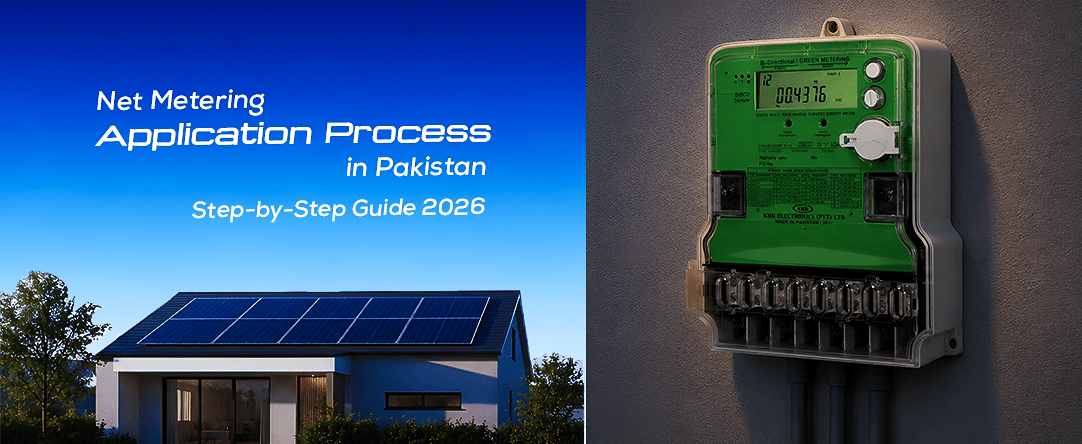
With electricity tariffs hitting record highs, net metering has become the gold standard for residential, commercial, and industrial property owners across Pakistan. Converting your solar energy setup into an active grid-connected generator allows you to export excess daytime electricity, offset nighttime consumption, and eliminate monthly power bills.
Under NEPRA (National Electric Power Regulatory Authority) framework and distribution company (DISCO) regulations, applying for net metering requires navigating technical audits, safety compliances, and multi-tier documentation.
This complete 2026 guide breaks down the net metering application process step-by-step, highlights key regulatory updates, covers mandatory equipment compliance, and explains how to get your bi-directional smart meter commissioned without delays.
What is Net Metering & What Changed in 2026?
Net metering is a billing mechanism that connects your on-grid or hybrid solar power system directly to your local electricity distribution company (e.g., LESCO, IESCO, MEPCO, FESCO, GEPCO, or K-Electric).
When your solar PV array generates more electricity than your property consumes, excess energy flows back into the national grid. A specialized bi-directional (import/export) smart meter records both the units you import from WAPDA and the units you export.
Key Regulatory Shift: Net Metering vs. Net Billing
Under NEPRA Prosumer Regulations, Pakistan has shifted toward structured net billing mechanisms to maintain grid stability.
-
Self-Consumption Focus: Rather than relying solely on aggressive export credits, the highest financial return comes from maximizing daytime self-consumption (running ACs, water pumps, and heavy machinery directly on solar). To maximize self-consumption efficiency, read our guide on Why Solar Panels Lose Efficiency & How to Fix It.
-
System Sizing Limits: DISCOs strictly enforce system capacity limits. Solar PV system capacity cannot exceed the property’s sanctioned load listed on the monthly utility bill.
Step-by-Step Net Metering Application Process
Step 1: Site Feasibility Audit & System Sizing
Before filing any application, conduct a thorough site survey through an AEDB-certified (Alternative Energy Development Board) / PEC-registered solar installer.
-
Sanctioned Load Check: Your solar inverter capacity must match or remain below your electricity meter’s sanctioned load. If your current load is 5 kW but you plan to install a 10 kW system, you must apply for a sanctioned load extension with your DISCO prior to net metering submission.
-
Structural & Electrical Review: Ensure your roof space can support high-efficiency bifacial solar modules and that your main distribution board (DB) has adequate physical space for AC/DC breaker protection chains. For detailed guidance on choosing panels, explore the Complete Guide to Best Solar Panels in Pakistan.
Step 2: Preparing Documentations
Incomplete paperwork is the primary reason DISCOs reject or delay net metering files. Prepare the following documents in advance:
-
Applicant Identity: Copy of CNIC of the electricity bill owner.
-
Utility Bills: Paid copies of the last 3 months’ electricity bills.
-
Property Ownership: Proof of property ownership (Registry, Fard, or Allotment Letter).
-
Single Line Diagram (SLD): Engineering schematic of the solar PV system, inverters, grounding, and protective devices signed by a registered engineer.
-
Equipment Technical Datasheets: Manufacturer specification sheets for solar panels (Tier-1 certified) and inverters (UL 1741 / IEC 62116 compliant).
-
Installer Agreement: Signed contract between the prosumer and the certified AEDB solar installer.
Step 3: Application Submission to DISCO
Your installer submits the complete application file to the local DISCO office (e.g., LESCO Executive Engineer / Sub-Divisional Officer).
-
A nominal processing fee voucher is issued by the DISCO.
-
The DISCO’s technical team reviews the application for grid feeder capacity. Distribution transformers typically have an export cap (often up to 80% of transformer capacity) to prevent localized grid over-voltage.
Step 4: Technical Site Inspection & NOC Approval
A DISCO inspection engineer visits your site to verify electrical safety compliance:
-
Anti-Islanding Protection: Verifies that the hybrid or grid-tied inverter immediately disconnects from the grid during WAPDA load shedding to protect line workers. Check out MaxPower Export-Ready Inverters engineered with built-in anti-islanding protection.
-
Grounding & Surge Protection: Checks for dedicated earthing pits for both AC and DC sides, along with Surge Protection Devices (SPD) and Molded Case Circuit Breakers (MCCB).
-
Upon successful audit, the DISCO issues a No Objection Certificate (NOC) and signs the 3-party Grid Interconnection Agreement.
Step 5: NEPRA Generation License Issuance
The signed agreement and NOC are forwarded to NEPRA for formal issuance of your Distributed Generation License. Once approved, NEPRA registers your system as an official prosumer generation facility.
Step 6: Bi-Directional Smart Meter Installation
After license confirmation:
-
Pay the fee voucher for the PEPCO-approved Bi-Directional Smart Meter (AMI meter).
-
The DISCO testing laboratory tests and seals the smart meter.
-
DISCO technicians remove your old unidirectional electricity meter and install the new bi-directional smart meter.
Step 7: Final Commissioning & Net Billing Activation
With the smart meter installed, the system is turned on. The DISCO updates your consumer profile in their billing database. Your monthly bill will now display:
-
Peak & Off-Peak Import Units consumed from WAPDA.
-
Export Units sent to the grid from your solar panels.
-
Net Payable / Credit Balance calculated based on active tariff rules.
Cost & Processing Timeline Breakdown
| Component / Stage | Estimated Cost (PKR) | Typical Timeline |
| DISCO Application & Processing Voucher | Rs. 1,000 – Rs. 3,000 | Week 1 |
| Engineering SLD & Inspection Fees | Rs. 5,000 – Rs. 10,000 | Week 2 |
| PEPCO Approved Bi-Directional Meter | Rs. 25,000 – Rs. 45,000 | Week 3–4 |
| Protection Equipment (SPDs, MCCBs, Earthing) | Rs. 35,000 – Rs. 70,000 | Installed with System |
| NEPRA License & Final Commissioning | Included in Installer Fee | Week 4–8 |
| TOTAL (Net Metering Setup Only) | Rs. 75,000 – Rs. 130,000 | 30 to 60 Days Total |
Mandatory Protection Equipment Checklist for Approval
To pass DISCO site inspections on the first attempt, your solar setup must include:
-
Grid-Tie / Hybrid Inverter: Must feature certified anti-islanding capabilities (IEC 62116 / UL 1741 standards). Explore grid-compliant inverters on MaxPower Solar Inverters and Maxell Power Systems.
-
DC Disconnect Switch & SPDs: Type 2 Surge Protection Devices installed between the PV array and inverter.
-
AC Circuit Protection: Dedicated MCCB/MCB breaker placed between the inverter output and the main DB board.
-
Dual Grounding Architecture: Independent earthing pits (resistance < 5 Ohms) for PV frame structure and inverter electrical neutrals.
Frequently Asked Questions
How long does the complete net metering process take in Pakistan?
The typical net metering process takes between 30 to 60 days from initial application submission to final meter installation, depending on DISCO workload and NEPRA license processing speed.
Can I apply for net metering on a single-phase electricity connection?
Generally, net metering requires a three-phase electricity connection. If your home currently has a single-phase connection, you must apply for a three-phase meter upgrade with your DISCO before submitting a net metering application.
What happens to my excess exported units at the end of the month?
Exported units are credited against your imported units. If your total daytime exports exceed your total imports, the net financial credit carries over to subsequent billing cycles or is settled according to current NEPRA prosumer payout regulations.
Can I add battery backup to a net-metered solar system?
Yes! Installing a MaxPower Hybrid Solar System allows you to connect high-efficiency energy storage, such as the MaxPower MP-Series Lithium-Ion Batteries. This keeps your essential home loads running during grid load shedding while maintaining active net metering exports when the grid is operational.
Why do DISCOs reject net metering applications?
Common rejection reasons include:
-
Inverter capacity exceeding the sanctioned connection load.
-
Submitting applications through non-AEDB-certified vendors.
-
Missing DC/AC surge protection devices or inadequate earthing grounding.
-
Feeder-level capacity saturation on local distribution transformers.
Streamline Your Net Metering Approval Today
Don’t let regulatory paperwork slow down your solar savings. Partner with experienced engineering teams to ensure full DISCO and NEPRA compliance. Explore tailored solutions on MaxPower Residential Solar Solutions, review industrial setups on MaxPower Commercial Solar Solutions, or visit Maxell Power Group to start your transition to clean, grid-tied solar energy today!