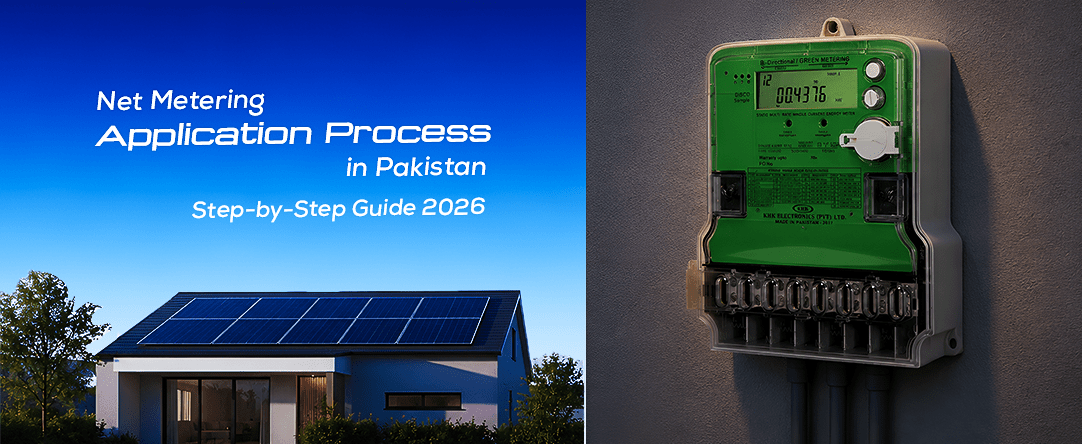
Net Metering Application Process in Pakistan – Step-by-Step Guide 2026
August 15, 2026
Save Fuel, Save Money – Upgrade Your Tube Well to Solar with Maxpower in 2026
October 29, 2026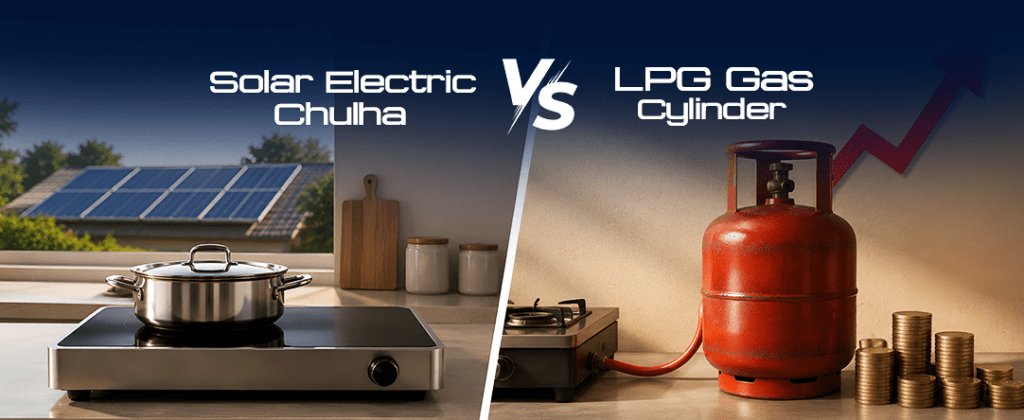
Electric Chulha vs LPG Cylinder Is Solar-Powered Cooking Cheaper in Pakistan?
Kitchen fuel has quietly become one of the heaviest recurring expenses for Pakistani households. Natural gas supply through Sui Northern Gas Pipelines Limited (SNGPL) and Sui Southern Gas Company (SSGC) has declined steadily, and during winter mornings and peak dinner hours, pipeline pressure on residential lines often drops to near zero.
For millions of families, the only immediate workaround has been liquefied petroleum gas (LPG). Yet with domestic 11.8 kg cylinder prices fluctuating between Rs. 3,000 and Rs. 4,500 or more, cooking three meals a day on bottled gas places severe strain on monthly budgets.
At the same time, the rapid adoption of rooftop solar across Pakistan has introduced an alternative: electric cooking using induction or infrared cooktops powered directly by solar panels and lithium storage.
If your home already has solar panels or you are planning an installation, is running an electric chulha on solar power genuinely cheaper than buying LPG cylinders? Here is the cost breakdown, energy efficiency analysis, and real-world payback calculation.
For an average Pakistani family of five to six members, a standard 11.8 kg domestic LPG cylinder lasts approximately fifteen to twenty days under ordinary cooking routines—preparing rotis, handi dishes, daily chai, and heating water.
At that rate of use, a household consumes roughly 1.5 to 2 cylinders every month.
- Monthly cylinder consumption: 1.5 to 2 cylinders (11.8 kg each)
- Retail cost per cylinder: Rs. 3,000 to Rs. 4,500+ (depending on OGRA notification and retail margins)
- Monthly kitchen fuel expense: Rs. 5,000 to Rs. 9,000
- Annual cooking overhead: Rs. 60,000 to Rs. 100,000+
Beyond the direct expense, LPG carries three everyday frustrations:
- Price volatility: Retail cylinder rates fluctuate with international propane and butane benchmarks, currency movements, and winter shortages, making kitchen expenses hard to predict.
- Safety concerns: Substandard local decanting, untested cylinders, and worn rubber delivery pipes present genuine fire and explosion risks in residential kitchens.
- Logistics: Transporting thirty-kilogram steel cylinders to refilling stations or paying premium delivery rates creates recurring friction.
Electric cooktops divide into two main technologies, each operating differently:
- Induction cookers: Use high-frequency electromagnetic coils to heat the cooking pot directly, achieving approximately 85% to 90% thermal efficiency. Almost no heat is lost to the surrounding air, meaning water boils and curries cook significantly faster than on open gas flames. They require magnetic cookware such as stainless steel, iron, or cast iron.
- Infrared (ceramic) cookers: Use high-efficiency halogen or radiant resistance coils to transfer infrared heat through a ceramic glass plate. Thermal efficiency sits around 70% to 75%, and they work with any traditional cookware, including round-bottom aluminum degchis and clay handis.
A typical single-burner electric chulha draws between 1,200 Watts and 2,000 Watts at maximum power. In typical daily use, cooking takes about two to two-and-a-half hours across all meals, consuming between 3.5 kWh and 4.5 kWh of electricity daily.
When this load is powered by a rooftop solar installation, the electricity driving the stove is produced directly by your solar array during peak daylight hours. Because the marginal cost of daytime solar generation is zero, the fuel cost per meal becomes effectively Rs. 0.
Assuming a standard household uses approximately 4 kWh of electrical energy daily for meal preparation, or approximately 0.6 kg of LPG gas equivalent:
- LPG Gas Cylinder: Requires roughly 18 kg of gas per month. At current retail rates of Rs. 250 to Rs. 380 per kilogram, the monthly outlay runs between Rs. 5,000 and Rs. 8,500, resulting in an annual expenditure of Rs. 60,000 to over Rs. 100,000.
- Electric Chulha on Grid Power: Consumes approximately 120 kWh per month. At upper-slab residential utility rates of Rs. 50 to Rs. 65 per unit, monthly grid electricity cost comes to Rs. 6,000 to Rs. 7,800, leading to an annual cost of Rs. 72,000 to Rs. 93,000.
- Electric Chulha on MaxPower Solar: The daytime 4 kWh daily consumption is drawn straight from rooftop solar panels or stored lithium reserves. Monthly marginal fuel cost is Rs. 0, and annual recurring fuel expenditure is Rs. 0.
Running an electric stove on peak-rate grid electricity is not dramatically cheaper than LPG. The financial benefit emerges when the stove runs on rooftop solar, where generation is already paid for through the system’s capital investment.
To understand how self-consumption maximizes returns under Pakistani utility tariffs, explore our guide on how to reduce electricity bills with solar energy.
An electric stove is a high-draw resistive load. Running a 2,000 Watt appliance alongside regular household loads requires equipment engineered for continuous high-amperage output without voltage sag or nuisance tripping.
When an electric cooktop operates alongside an inverter refrigerator, ceiling fans, and an air conditioner, the simultaneous load can easily reach 3.5 kW to 5.5 kW.
The MaxPower hybrid solar inverter range—including the Voltas and Suntronic series—features pure sine wave output, high surge tolerance, and dual MPPT trackers to ensure that inductive and resistive loads run stably without tripping the inverter. For commercial kitchens and larger residential properties, three-phase high-voltage models are available in the broader MaxPower solar inverter catalog.
Because dinner is prepared after sunset, solar cooking in the evening relies on battery storage.
Traditional tubular or lead-acid batteries struggle with heavy 2 kW loads because high discharge currents trigger voltage drops and rapid sulfation. By contrast, lithium iron phosphate (LiFePO4) storage delivers high C-rates and maintains stable voltage across deep cycles.
A 5.12 kWh or 10.24 kWh battery bank from the MaxPower lithium battery range—such as the MP-5000 Ultra or MP-10000 Ultra—provides ample capacity to handle evening meal preparation (which consumes roughly 1.5 to 2 kWh) while keeping essential lights, fans, and refrigeration running through the night.
To calculate exact runtime based on your appliance wattages, review our detailed guide on how to calculate battery backup hours.
If your property is grid-connected with net metering under current NEPRA prosumer rules, surplus daytime generation exported to your DISCO earns credits that offset grid units consumed during late-night cooking. To navigate the interconnection and licensing steps, refer to our step-by-step net metering application guide.
A quality single-burner induction or infrared cooktop typically costs between Rs. 8,000 and Rs. 15,000 in Pakistan.
For a household spending Rs. 7,000 per month on LPG refills:
- Monthly LPG expenditure eliminated: Rs. 7,000
- Annual kitchen fuel savings: Rs. 84,000
- Payback period for the electric stove: 6 to 9 weeks
Once the purchase price of the electric cooktop is recovered, the ongoing savings directly benefit your household budget every month.
For homes planning a new solar system or adding capacity to an existing array, adding 1.5 kW to 2 kW of solar panels specifically for kitchen electrification pays for itself within two to three years through eliminated LPG purchases alone, well ahead of the system’s 25-year operational lifespan.
To determine the ideal system capacity for your household load, consult our guide on how to choose the right solar system size.
Cooking with LPG cylinders in Pakistan has become an expensive, inconvenient, and unpredictable way to run a kitchen. Transitioning to a modern electric chulha powered by a rooftop solar system removes cylinder deliveries, eliminates open flames, and reduces monthly kitchen fuel expenses to near zero.
Whether you are looking to run appliances during daytime solar hours or want a complete setup with lithium storage for evening cooking, MaxPower provides the climate-tested hardware needed for reliable, long-term performance.
Explore our full range of solar modules, pure sine wave hybrid inverters, and high-cycle lithium storage systems on the official MaxPower products catalog, or contact our technical team to size a system tailored to your household load.
Can a 3 kW or 5 kW MaxPower solar system run an electric induction chulha?
Yes. A 2,000W electric chulha requires 2 kW of real-time power. A 3 kW or 5 kW hybrid solar system easily handles a 2 kW induction stove during daytime hours while continuing to power baseline lighting, ceiling fans, and refrigeration.
Is cooking on an electric chulha faster than cooking on an LPG gas burner?
Yes. Induction cookers transfer thermal energy directly to magnetic cookware with 85% to 90% efficiency, compared to roughly 40% to 50% efficiency for open gas flames. Water boils and food cooks up to 30% to 50% faster, with significantly less waste heat in the kitchen.
What happens if I cook dinner after sunset?
After sunset, your electric cooktop draws power from your connected lithium battery bank or the utility grid. A properly sized LiFePO4 battery safely supports the 1.5 to 2 kWh typically needed for dinner preparation without excessive voltage drop.
Do I need special pots and pans for an electric chulha?
Induction cookers require cookware made of ferrous metals, such as stainless steel, cast iron, or flat-bottomed iron pans. Infrared cookers, by contrast, work with all cookware types, including traditional aluminum pans and clay pots.
How much extra solar capacity should I add for an electric stove?
When designing a solar system to cover cooking needs, adding approximately 1.5 kW to 2 kW of solar PV capacity and 2 kWh to 3 kWh of usable battery storage comfortably covers daily meal preparation for a standard family.