How Many Hours of Backup Can I Get from a Lithium Battery?
February 10, 2026
What is the Difference Between IP21 and IP65 Inverters?
December 4, 2024
The Future of Energy Storage: Why Lithium-Ion Batteries Are Redefining Solar in Pakistan
Lithium-ion energy storage systems—specifically Lithium Iron Phosphate ($\text{LiFePO}_4$) chemistry—have transformed modern renewable energy. From electric vehicle propulsion to grid-level reserve capacity, high-density lithium storage bridges the gap between intermittent solar generation and round-the-clock power consumption.
In markets experiencing frequent grid load-shedding and rising retail electricity tariffs, pairing high-efficiency solar photovoltaic (PV) arrays with lithium storage guarantees complete energy independence.
Key Technical Advantages of $\text{LiFePO}_4$ Energy Storage
[ PV Modules ] ➔ [ Hybrid Solar Inverter ] ➔ [ Domestic AC Loads ]
                     ▼
[ Smart BMS Lithium Battery ] ⇄ [ Utility Grid ]
1. Superior Round-Trip Efficiency & Usable Capacity
Unlike legacy flooded lead-acid or gel batteries—which restrict usable Depth of Discharge (DoD) to 50% to prevent rapid degradation—lithium iron phosphate systems safely operate at 80% to 90%+ usable capacity. The chemistry offers >95% round-trip efficiency, minimizing energy conversion losses during charge and discharge cycles.
2. Extended Operational Lifespan
While traditional lead-acid battery banks typically require total replacement after 2 to 3 years (500–1,200 cycles), premium $\text{LiFePO}_4$ storage systems deliver 6,000+ deep-discharge cycles. This translates to a reliable operational lifespan of 10 to 15 years, vastly reducing long-term levelized cost of storage (LCOS).
3. Accelerated C-Rate Charging
Lithium storage modules support higher continuous charge currents (up to 0.5C–1C). This allows battery banks to fully recharge within 2 to 3 hours during peak midday solar irradiance or brief grid availability windows—an essential requirement for regions with short daily charging periods.
4. Integrated Smart Management & Maintenance-Free Design
-
Smart BMS: Built-in Battery Management Systems continuously monitor individual cell voltages, balance active state-of-charge (SoC), and prevent over-voltage, thermal spikes, or short circuits.
-
Maintenance Free: Sealed enclosures eliminate water top-ups, terminal corrosion checks, and acid venting setups.
Technical Performance Comparison: Lithium vs. Legacy Storage
| Feature | Legacy Lead-Acid / Tubular | Advanced Lithium Iron Phosphate (LiFePO4) |
| Recommended Usable DoD | 50% max usable capacity | Up to 90% usable depth of discharge |
| Cycle Life Expectations | 500 – 1,200 cycles (2–3 years) | 6,000+ cycles (10–15 years lifespan) |
| Charge Recovery Time | 8 – 10 hours slow absorption | 2 – 3 hours rapid charging |
| Maintenance Overhaul | Periodic water top-ups & venting required | Zero maintenance, fully sealed wall/rack mount |
| Volumetric Energy Density | Heavy, large footprint per kWh | Compact, space-saving lightweight enclosures |
High-Performance Storage Solutions by Maxpower
Deploying durable storage units engineered specifically for harsh ambient temperatures and unannounced grid outages ensures long-term power security. Hardware offered through maxellpower.com provides maximum power density and full inverter integration:
-
High-Capacity Residential Storage: Models like the Maxpower MP-5000 Alpha Lithium Battery (5.12 kWh capacity, 51.2V 100Ah nominal) feature built-in smart BMS protection, 6,000+ cycle guarantees, and parallel stacking support (up to 15 units) for scalable capacity.
-
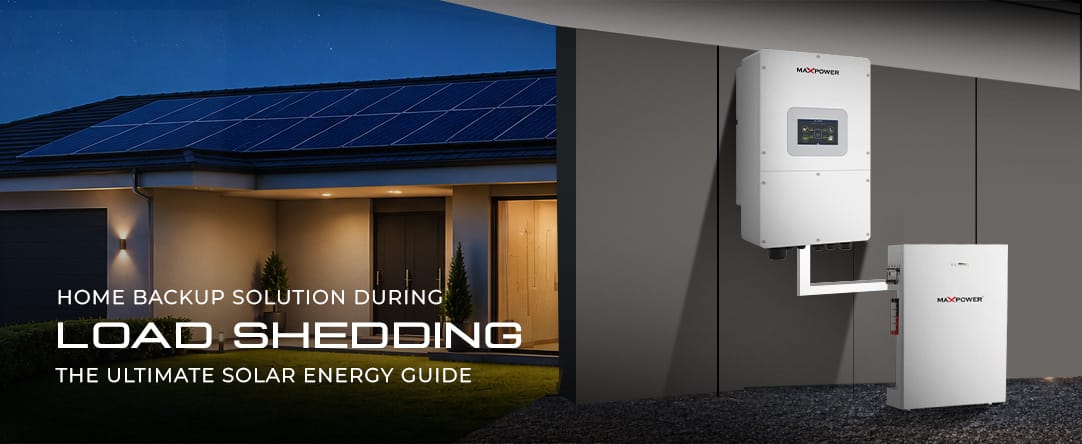
Ultra-Fast Inverter Switching: Pairs seamlessly with Maxpower hybrid solar inverters (such as the PV Tech and IP66 Voltas series) for <10 ms automated transfer during grid outages.
-
Commercial Energy Arrays: High-voltage lithium storage modules engineered for commercial factories, offices, and heavy industrial applications.
To choose the right battery size and inverter match, explore technical guides on selecting the best solar battery in Pakistan and step-by-step solar panel installation. Download complete technical data sheets directly on the Maxpower Solar Catalog.
Frequently Asked Questions
Why are $\text{LiFePO}_4$ lithium batteries safer than standard lithium-ion batteries?
Lithium Iron Phosphate ($\text{LiFePO}_4$) chemistry offers superior thermal and chemical stability. It resists high ambient temperatures and avoids thermal runaway risks, making it the safest battery technology for indoor residential installations.
Can I connect multiple lithium batteries in parallel to increase capacity?
Yes. Advanced lithium batteries like the Maxpower MP-5000 Alpha support parallel expansion up to 15 units, allowing homeowners and businesses to scale storage capacity from 5.12 kWh up to 76+ kWh as energy demands grow.
How long will a 5.12 kWh lithium battery back up a household during an outage?
At an 80% Depth of Discharge, a 5.12 kWh battery delivers approximately 4.1 kWh of usable backup energy. This can continuously run standard household loads—such as LED lighting, fans, a refrigerator, water pump, and router (drawing 500 Watts continuously)—for roughly 8 hours.
Do lithium batteries work with older existing solar inverters?
Lithium batteries require an inverter capable of communicating with their built-in Battery Management System (BMS) via RS485 or CAN bus protocols. Upgrading to a modern hybrid solar inverter guarantees proper charge/discharge cycle synchronization.
What is the primary financial advantage of upgrading to lithium storage?
Although initial capital cost is higher, lithium batteries cost significantly less per cycle over their 10 to 15-year operational life compared to replacing legacy lead-acid batteries every 2 to 3 years.