A Comprehensive Guide to Choosing Net Metering Systems and Maximizing the Benefits of Solar Energy at Home
February 21, 2023
The Financial Benefits of Investing in Solar Water Pumping for Farmers in Pakistan
February 15, 2023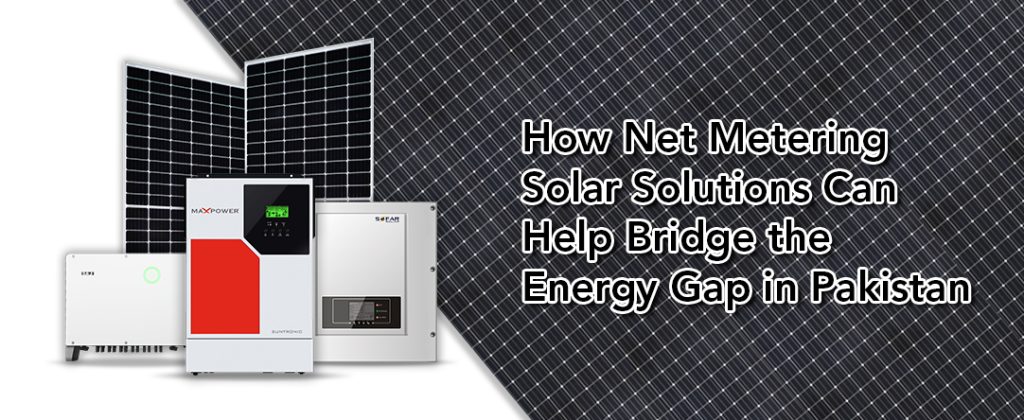
Pakistan is facing an energy crisis that has led to frequent power outages, high utility tariffs, and load shedding across residential and commercial sectors. The country’s demand for electricity is increasing rapidly, but supply grid improvements remain slow, resulting in a widening national energy gap.
This power shortfall significantly impacts economic growth, industrial productivity, and environmental sustainability. However, a proven, highly viable solution gaining mass momentum is rooftop net metering solar solutions. Installing custom Maxpower Hybrid Solar Systems and high-efficiency panels allows Pakistani homeowners and businesses to generate clean electricity, sell excess power back to the grid, and significantly slash monthly utility costs.
What is the Energy Gap in Pakistan?
The energy gap in Pakistan refers to the substantial deficit between peak power demand and actual grid supply. Home to over 240 million people, Pakistan’s expanding industrial and residential sectors face severe electricity shortfalls due to:
-
Heavy reliance on imported fossil fuels like RFO, LNG, and Coal.
-
Outdated distribution infrastructure and DISCO transmission losses.
-
Lack of timely government investment in renewable energy projects.
The Economic & Social Cost of Power Shortages
Frequent load shedding directly damages business operations, causing massive revenue losses in manufacturing and services. Rising unit rates and peak-hour surcharges place an immense burden on consumers. To build long-term energy independence, transitioning to decentralized rooftop solar coupled with a NEPRA-approved net meter has become a financial necessity.
How Net Metering Solar Solutions Bridge the Energy Gap
Net metering is a billing mechanism that allows solar system owners to export surplus electricity generated during daylight hours back into the national grid.
When your PV system generates more electricity than your property consumes, a bi-directional green meter records the exported kilowatt-hours (kWh). These units are credited against your bill, allowing you to offset night-time consumption or peak-hour power drawn from local DISCOs like LESCO, IESCO, K-Electric, MEPCO, and FESCO.
The Net Metering Power Flow
-
Solar panels capture sunlight and generate DC electricity.
-
The Maxpower Smart Inverter converts DC into usable AC power.
-
Your home or business uses the required electricity first.
-
The bi-directional meter measures excess energy and sends it to the national grid.
Core Advantages of Net Metering Solar Systems in Pakistan
| Feature / Benefit | Impact on Pakistani Consumers & Grid |
| Maximized Electricity Bill Savings | Slashes monthly DISCO electricity bills by 70% to 90% via unit-to-unit export credits. |
| Rapid Payback Period (ROI) | Average system payback achieved within 3 to 4.5 years thanks to high grid electricity tariffs. |
| Grid Load Reduction | Decentralized solar feeds local transformers, reducing line losses and neighborhood load shedding. |
| Zero Carbon Footprint | Clean energy generation directly lowers dependence on expensive imported oil and thermal power plants. |
1. Financial Relief & Cost-Effectiveness
With tier-1 panel prices stabilizing and grid tariffs rising, rooftop solar provides high returns. Utilizing high-efficiency N-Type TOPCon Solar Panels paired with Maxpower Inverters maximizes generation efficiency even during extreme summer temperatures.
2. Uninterrupted Power with Hybrid Energy Storage
Standard grid-tied systems shut off during grid outages for safety. However, pairing net metering with Maxpower LiFePO4 Lithium Batteries provides a hybrid solar solution. This guarantees 24/7 backup power for critical loads like air conditioners and water pumps during load shedding while keeping the net metering active when the grid is available.
Key Challenges of Net Metering in Pakistan & Solutions
While solar adoption is growing rapidly, consumers face a few key hurdles:
1. Evolving Regulatory Policies
NEPRA regulations regarding net billing frameworks, export caps, and buyback rates continue to evolve.
-
Solution: Sizing your solar system to match your actual daytime consumption ensures maximum self-consumption, minimizing reliance on low grid buyback rates. Use the Maxpower Solar Load Calculator to size your system correctly.
2. Initial Upfront Investment
System components, 3-phase bi-directional meters, and DISCO approvals require initial capital.
-
Solution: Low-interest green banking schemes and commercial solar leasing options make upfront costs easily manageable with quick ROI turnaround times.
3. Proper Infrastructure & Protection Compliance
DISCOs require strict adherence to single-line diagrams, AC/DC SPDs, Type-B RCCBs, and anti-islanding inverter protections before granting net metering licenses.
-
Solution: Always hire certified AEDB vendors who utilize standard protection gear and high-grade Maxpower On-Grid & Hybrid Solar Inverters fully compliant with NEPRA regulations.
Frequently Asked Questions
What is net metering and how does it work in Pakistan?
Net metering is a grid-connected billing mechanism regulated by NEPRA that lets solar prosumers export surplus solar electricity to the national grid via a bi-directional green meter. Exported units offset your grid electricity consumption on your monthly DISCO bill.
How long does the net metering application and installation process take?
The complete net metering process—including documentation submission, DISCO site inspection, single-line diagram approval, bi-directional meter installation, and NEPRA license issuance—typically takes 30 to 60 days depending on your local distribution company like LESCO, IESCO, or K-Electric.
Can I get net metering on a single-phase electricity connection?
No. Under standard NEPRA regulations, net metering in Pakistan requires a 3-phase electricity connection. Single-phase consumers must upgrade their grid connection to 3-phase before applying for net metering.
What is the average ROI (payback period) for a rooftop net-metered solar system?
A standard residential or commercial net-metered solar system in Pakistan achieves full payback in 3 to 4.5 years, driven by high DISCO utility tariffs. After payback, the system delivers virtually free electricity for the remaining 20 to 25 year lifespan of the solar panels.
What happens to net metering during a load shedding grid outage?
Standard grid-tied inverters automatically shut down during power outages for worker safety. To maintain continuous power during load shedding while keeping net metering capabilities, install a Hybrid Solar System with Lithium-ion Battery Storage.