Solar Inverters: Tackling Pakistan’s Energy Crisis
April 11, 2023
Embrace the Future of Energy: Explore the Exciting Advancements and Innovations in Solar Energy
March 29, 2023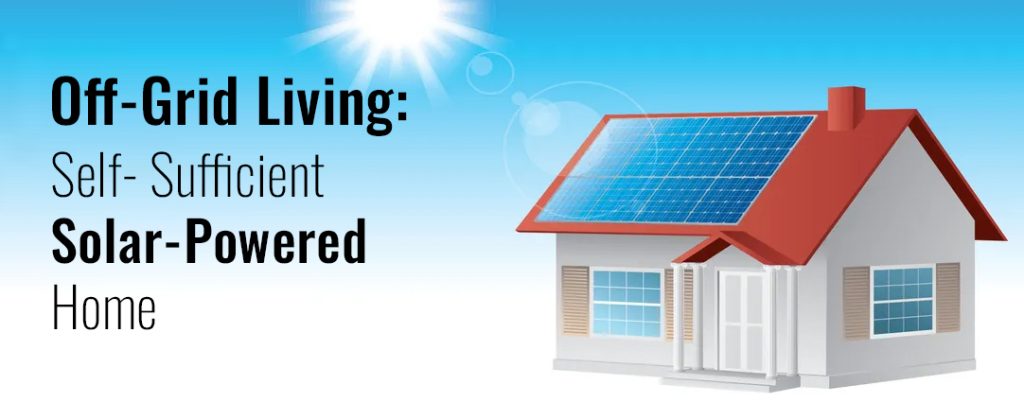
As Pakistan faces rising electricity prices and frequent load‑shedding, more homeowners are turning to solar energy as a sustainable and cost‑effective solution. With solar panels and solar inverters from Maxpower, a leading solar solutions company in Pakistan, building a self‑sufficient, off‑grid or hybrid home has never been easier.
This guide covers practical tips for choosing the right solar panels, solar inverters, and energy storage systems to create a reliable solar‑powered home in Pakistan.
Why Choose Solar Energy in Pakistan?
Solar energy is a renewable and clean energy source that offers multiple benefits for Pakistani homeowners:
-
Lower electricity bills – Reduce dependence on grid utilities (DISCOs like LESCO, K-Electric, FESCO) and cut monthly costs.
-
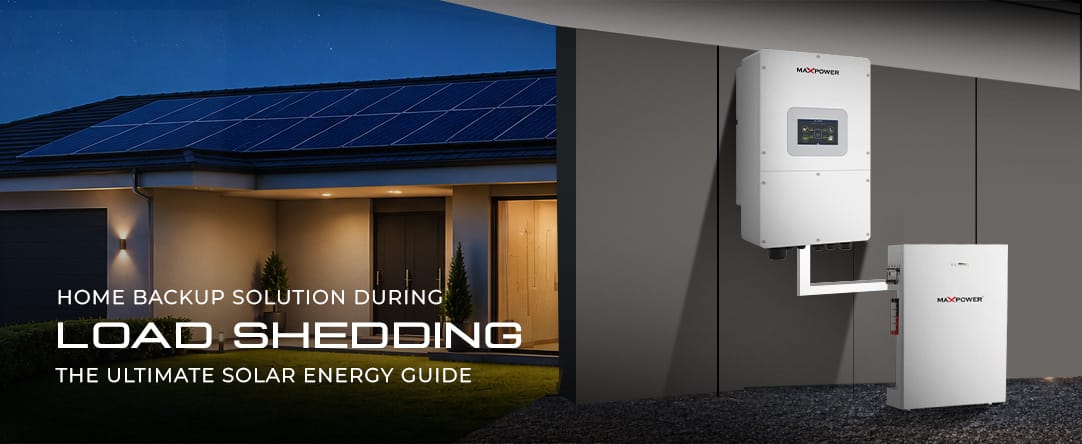
Load‑shedding protection – Keep air conditioners, refrigerators, lights, and essential appliances running seamlessly during grid outages.
-
Increased property value – Solar‑equipped homes are more attractive to prospective buyers.
-
Minimal maintenance – Modern solar panels and solid-state hybrid inverters require little upkeep.
By switching to solar, you not only secure immediate utility savings but also contribute to a greener Pakistan.
Advantages of Maxpower Solar Panels and Solar Inverters
Maxpower provides high‑quality solar panels and solar inverters designed specifically for Pakistan’s harsh operational climate—extreme summer heat, dust accumulation, and violent grid voltage fluctuations.
Key advantages:
-
High Efficiency: Maxpower Bifacial Solar Panels (such as half-cut N-type modules) capture sunlight from both sides, maximizing yield even during diffuse light days.
-
Weatherproof Durability: Built with heavy-duty aluminum framing and high-grade junction boxes to withstand high ambient dust and monsoon rains.
-
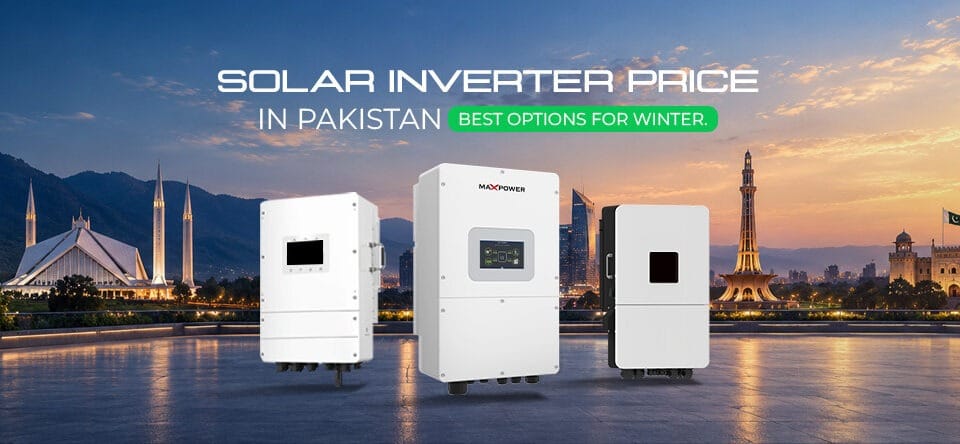
Versatile Inverters: From residential setups to large commercial buildings, Maxpower offers the Suntronic and Voltas HYD (IP66 rated) hybrid inverter series tailored for dual MPPT tracking and seamless battery integration.
Tips for Choosing Solar Panels in Pakistan
1. Calculate Your Energy Needs
Before buying solar panels in Pakistan, determine your home’s energy profile:
-
Review your last 3–6 months’ DISCO electricity bills (check peak units consumed in summer).
-
Account for high-draw heavy loads (e.g., inverter ACs, water pumps, refrigerators).
-
Factor in future expansions (e.g., electric vehicle chargers or additional rooms).
This assessment helps determine whether a 5 kW, 10 kW, or 15 kW system is required.
2. Choose the Right Type of Solar Panels
-
Monocrystalline / Bifacial Half-Cut Panels: Deliver higher conversion efficiencies ($>21\%$) and optimal performance in high heat or limited roof space.
-
Polycrystalline Panels: More budget-friendly, but require significantly more installation surface area for the same energy output.
For most Pakistani homes, monocrystalline bifacial solar panels offer the optimal balance of efficiency and long-term return on investment.
3. Consider Panel Size and Installation Location
-
Measure your roof or ground mounting area carefully.
-
Ensure panels are tilted and face South (at the recommended angle for local latitude) to maximize daily solar incidence.
-
Eliminate shading from water tanks, parapet walls, or neighboring buildings.
Tips for Choosing Solar Inverters in Pakistan
Solar inverters convert direct current (DC) produced by your panels into alternating current (AC) for household appliances. Choosing the right inverter capacity is critical for system reliability.
1. Determine Inverter Capacity
Match the inverter’s rated capacity (kW) to your solar panel array size. For example, pair a 6 kW array with a 6 kW hybrid inverter (such as the Maxpower Voltas HYD 6K series).
2. Select the Inverter Topology
-
On-Grid Inverters: Best for pure net metering setups where zero battery backup is needed.
-
Hybrid Solar Inverters: Integrate solar panels, utility grid lines, and battery storage. They are the preferred choice in Pakistan because they maintain uninterrupted backup power during load-shedding while still allowing grid exports.
3. Look for Quality and Weather Protection
Look for built-in IP65 or IP66 ingress protection, dual MPPT trackers, and advanced Wi-Fi app monitoring. Explore models directly in the Maxpower Inverters Catalog.
Other Components for a Self‑Sufficient Solar‑Powered Home
Battery Storage
Store excess solar generation during daytime hours for use at night or during blackouts. High-capacity Lithium Iron Phosphate ($\text{LiFePO}_4$) battery banks—such as the Maxpower MP-Alpha Series—offer up to 10+ years of operational life, 90% Depth of Discharge (DoD), and fast charging compared to legacy lead-acid batteries. Learn more in our detailed guide on lithium batteries for home solar backup.
Monitoring System
Smart Wi-Fi dongles and cloud apps let you log daily generation metrics, track grid export credits, and review live battery capacity levels right from your smartphone.
Net Metering in Pakistan – Maximize Your Solar Investment
With net metering, you can:
-
Export excess solar power generated during peak sunlight to the local utility grid (LESCO, K-Electric, FESCO, etc.).
-
Receive financial credits that offset units consumed from the grid at night.
-
Dramatically shorten your overall system payback period.
Maxpower assists with DISCO compliance and provides net-metering-compatible on-grid and hybrid setups. Read our full step-by-step breakdown on the Net Metering Application Process in Pakistan.
Frequently Asked Questions
How do I determine if my home needs a 5 kW, 10 kW, or 15 kW solar system?
A 5 kW system typically produces 500–600 units per month (ideal for running 1–2 inverter ACs and basic home loads). A 10 kW system yields 1100–1200 units per month, making it suitable for larger homes with 3–4 inverter ACs and heavy daily consumption.
What happens to my hybrid solar system during grid load-shedding?
When the utility grid fails, a hybrid solar inverter instantly isolates from the grid and switches to draw power from connected solar panels and lithium battery storage, powering your home loads without interruption.
Are lithium-ion ($\text{LiFePO}_4$) batteries better than lead-acid batteries for home solar in Pakistan?
Yes. Lithium batteries feature a longer lifespan (10+ years vs. 2–3 years for lead-acid), faster charging times, higher depth of discharge (up to 90%), zero liquid maintenance, and a much smaller spatial footprint.
How does an IP66 rating benefit a solar inverter installed outdoors?
An IP66 rating certifies that the inverter is completely dust-tight and protected against powerful water jets. This allows outdoor rooftop mounting without needing an extra protective housing cabinet.
Can I add net metering to a Maxpower hybrid solar system?
Yes. Maxpower hybrid inverters are dual-directional and net-metering certified, allowing you to power your home loads, charge your battery bank, and export remaining surplus electricity to the national grid.