Best Lithium-Ion Batteries in Pakistan 2026: Max Power’s MP Series From 2.5 kWh to 32 kWh
May 21, 2026
Hybrid Inverter Prices in Pakistan 2026: Real Numbers From 3 kW to 10 kW
May 18, 20267 Tips That Help You Choose the Best Solar Inverter in Pakistan Without Getting It Wrong
The solar inverter market in Pakistan in 2026 is the largest and most confusing it has ever been. There are 37 Max Power inverter models alone listed on major third-party platforms. Add Inverex, Crown Micro, Knox, Solis, Goodwe, Fronus, Ziewnic, and the dozens of other brands active in the market, and a Pakistani buyer doing a first serious comparison faces hundreds of options across a bewildering range of specifications, price points, and warranty claims.
Pakistan added 1,181 MW of new net-metered solar capacity in 2023 to 2024 alone, double the prior year’s additions. Millions of buying decisions are being made right now, many of them in the absence of clear guidance. These seven tips are written for those buyers. They will not make your decision for you, but they will make sure you are asking the right questions before you sign anything.
7 Tips That Help You Choose the Best Solar Inverter in Pakistan
Tip 1: Know Your Load Before You Know Your Inverter Size
The Number That Determines Everything Else
Before any conversation about brands, IP ratings, or price, you need to know your peak simultaneous load in watts. Write down every appliance you need to run during load shedding. Look up the running wattage of each on the manufacturer label or a quick search. Add them up. Then identify the highest-startup-draw appliance, almost always a compressor motor in an AC unit or refrigerator, which pulls 2 to 3 times its running wattage for the first 2 to 3 seconds at startup.
Your inverter needs to handle the simultaneous running load continuously and the startup surge without tripping. A 5 kW inverter with 8 kVA surge handles a single 1.5-ton inverter AC unit startup. Two AC units starting together needs a 6 to 8 kW inverter with 12 to 16 kVA surge headroom. Getting this wrong means your best solar inverter in Pakistan trips at exactly the moment you need it.
Tip 2: Decide Between Hybrid and On-Grid Before Comparing Anything Else
They Solve Different Problems
An on-grid inverter converts solar energy to AC power for immediate use and exports surplus to the grid. When the grid fails during load shedding, it shuts off automatically for safety. It solves the electricity bill problem but does nothing for backup.
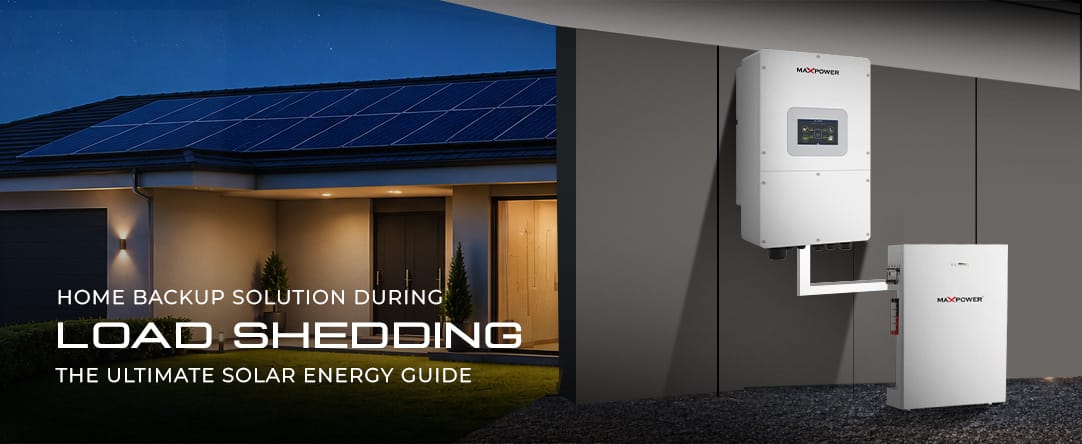
A hybrid solar inverter Pakistan setup adds battery management to this picture. It runs your loads from solar during the day, charges the battery simultaneously, and when the grid fails, transitions to battery and solar power in milliseconds without interruption. If your primary motivation is backup during load shedding rather than just bill reduction, the decision between on-grid and hybrid is made before you compare any brand or price.
Tip 3: Match IP Rating to Installation Location
This Specification Has Consequences
IP21 means protection against objects larger than 12.5mm and against condensation or vertically falling water droplets. It is an indoor rating for clean, enclosed installation spaces. IP66 means complete dustproof protection and resistance against powerful water jets from any direction. It is the right rating for any outdoor or semi-outdoor installation.
If your inverter will be mounted on an exterior wall, under a roof canopy, in an open plant room, or in any location where dust, humidity, or rain spray can reach it, you need IP65 minimum and IP66 where rain exposure is significant.
are IP66-rated as standard.
If your inverter is genuinely in a clean, enclosed indoor room with no weather exposure, IP21 is the correct specification for that application. Paying for IP66 protection in a fully indoor installation adds no value. Saving money on IP21 for an outdoor installation creates a real failure risk over a 10-year system life.
Tip 4: Count Independent MPPT Trackers and Know Why They Matter
Panel Layout Determines Whether You Need One or Two
Maximum Power Point Tracking is how the inverter finds the optimal operating point on your solar array’s power curve throughout the day as sun angle, temperature, and cloud cover change. A single MPPT tracker optimizes the entire panel string as one unit.
If all your panels face the same direction and receive the same sunlight exposure, one MPPT tracker handles the job adequately. If your roof has two usable faces with different orientations, or if part of the array gets shaded in the morning while the other gets shaded in the afternoon, a single MPPT tracker forces the whole string to operate at the most limited panel’s level, losing generation from the unshaded panels.
Two independent MPPT trackers optimize each string independently. Max Power’s Voltas H4 and H6 series feature dual MPPT as standard. For straightforward single-orientation rooftop arrays in Pakistan, single MPPT is workable. For anything more complex, dual MPPT is the specification that recovers meaningful energy.
Tip 5: Transfer Time Is What Protects Your Electronics
10 Milliseconds vs 60 Milliseconds Is Not a Minor Difference
Transfer time is how quickly the inverter switches from grid to battery power when the grid fails. Premium hybrid inverters achieve 10 milliseconds. Entry-level units range from 20 to 60 milliseconds. Both are fast in human terms. They are not equivalent for electronics.
Most desktop computers, laptops, and WiFi routers have internal capacitors that bridge power gaps under 20 milliseconds. A 10ms transfer inverter keeps everything running without a flicker. A 60ms transfer inverter causes computers to shut down, routers to restart, and DVRs to lose their settings at every load-shedding event. For homes with home offices, study setups, or any electronics that do not tolerate power interruption, the transfer time specification is a practical day-to-day quality of life issue.
Tip 6: Battery Compatibility Is a Future-Proofing Decision You Make Today
Choosing Lead-Acid-Only Now Limits You Later
An inverter that supports only lead-acid batteries is a locked-in product. If you install it today and want to upgrade to lithium storage in two years, you may need to replace the inverter to get BMS communication support. Max Power’s Voltas hybrid range supports both lead-acid and lithium-ion batteries with active BMS communication when paired with the MP series.
If you are not ready to invest in lithium storage now, choosing an inverter that supports lithium for when you are ready is a cost-free decision that protects your future upgrade path. The solar energy system Pakistan buyers who made lithium-compatible inverter choices two years ago are upgrading cleanly now. Those who chose lead-acid-only inverters face more complex transitions.
Tip 7: Verify Local Service, Not Just Warranty Duration
A 10-Year Warranty From a Company With No Local Presence Is Not a 10-Year Warranty
Warranty duration is the number that gets advertised. The practical value of that warranty depends entirely on whether the company honoring it has a physical presence in Pakistan, a documented claim process, authorized service centers in your city, and a history of actually fulfilling replacements.
Max Power operates an authorized dealer and service network across Lahore, Karachi, and Islamabad with nationwide distribution coverage. For solar solutions in Pakistan where after-sales support matters as much as the initial product quality, this verified local presence is what makes the warranty meaningful rather than theoretical.
Explore the Max Power inverter range and Max Power residential solutions before your next comparison conversation.
Frequently Asked Questions
What is the best hybrid inverter in Pakistan for a family home with heavy load shedding?
For a Pakistani family home running 2 to 3 air conditioning units, fans, lights, refrigerator, and electronics through 6 to 10 hours of daily load shedding, the best specifications are a 6 to 8 kW hybrid inverter with dual MPPT, IP66 outdoor protection if wall-mounted, 10ms transfer time, and 48V lithium battery compatibility. Max Power’s Voltas H6 series in the 6 kW to 8 kW range covers all of these requirements with verified local dealer support.
How do I know if my inverter needs IP66 or if IP21 is enough?
Ask yourself one question: will the inverter be in a fully enclosed, clean indoor room with no weather exposure at any time of year? If yes, IP21 is the correct rating. If the inverter will be on an exterior wall, under a roof canopy, in an outdoor plant room, or in any location where dust or rain can reach it at any point, IP66 is the minimum acceptable specification. The difference in product cost is far smaller than the cost of inverter replacement caused by dust or moisture damage in an under-rated installation.
Does Max Power offer solar inverters with monitoring apps for Pakistan?
Yes. Max Power’s Voltas hybrid series supports remote monitoring via app-based platforms through built-in WiFi connectivity. This allows homeowners to check real-time solar generation, battery state of charge, and grid consumption from a smartphone. The MP series lithium batteries also include built-in Bluetooth and WiFi monitoring, so a complete Max Power system provides end-to-end visibility without additional monitoring hardware.
What is the difference between the Max Power Suntronic and Voltas inverter series?
Both are distributed through Max Power in Pakistan. The Suntronic series covers compact hybrid inverter applications in the 3 kW to 12 kW single-phase range at competitive price points. The Voltas H4 and H6 series are premium single-phase hybrids with IP66 protection, dual MPPT, 7-inch touch colour LCD, and generator input support, targeting buyers who need full-featured hybrid performance in demanding installation environments. The Voltas commercial series extends to three-phase models up to 60 kW for industrial and large commercial use.
Is Max Power a good choice for a solar inverter in Pakistan compared to Inverex or Knox?
Max Power offers certified product quality across its Voltas and Suntronic series with a verified nationwide dealer and service network. Inverex carries the strongest domestic brand recognition and the widest retail footprint at accessible price points. Knox is competitive in the mid-market IP65 segment with good surge capacity ratings. Each brand serves different buyer profiles. For buyers prioritizing IP66 outdoor protection, lithium battery BMS integration, and commercial capability in the same product family, Max Power’s Voltas H6 series is a genuinely differentiated option.
Before You Buy a Solar Inverter, Ask Yourself One Question: Are You Choosing the Cheapest Option or the Right Long-Term Investment?
Many buyers focus only on price and brand name, but the real difference between an inverter that creates problems after a short time and one that delivers reliable performance for years comes down to the technical details most people overlook. Specifications like IP rating, MPPT efficiency, transfer time, battery compatibility, and after-sales support play a major role in how your system performs every day.
A solar inverter is not just another appliance. It is the core of your entire solar setup, and choosing the wrong one can lead to lower efficiency, compatibility issues, and expensive maintenance later on.
Explore the complete Max Power high-voltage inverter range and speak with our experts for a load-based recommendation tailored to your energy requirements before making your final decision.