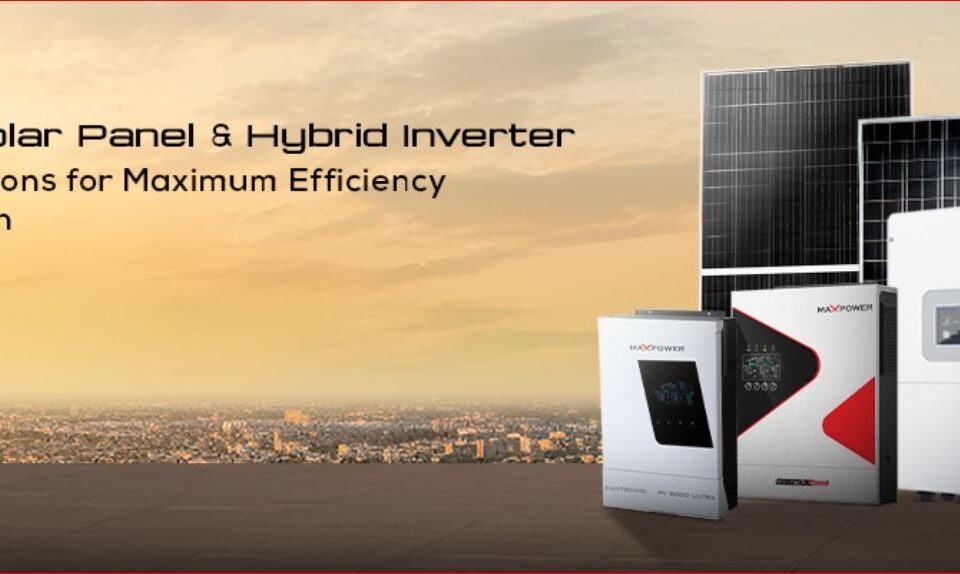
Best Solar Panel and Hybrid Inverter Combinations for Maximum Efficiency in Pakistan
June 11, 2026
Commercial Solar Solutions in Pakistan: An Honest Guide for Business Owners in 2026
May 28, 2026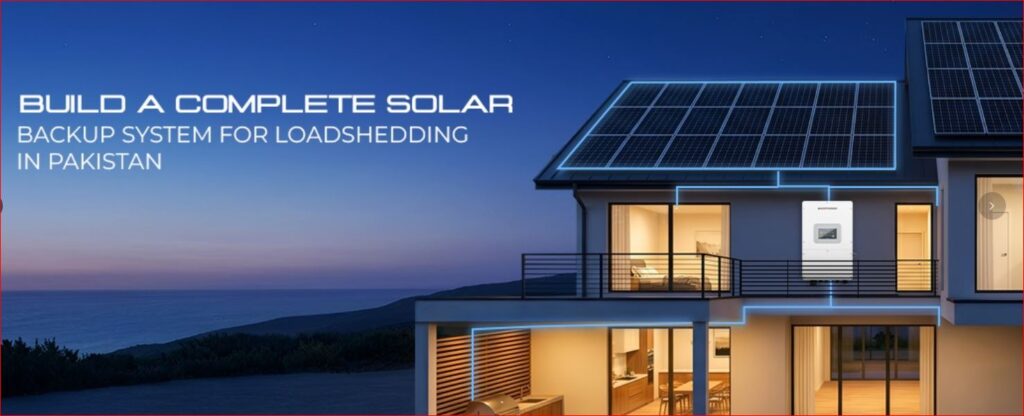
Load shedding in Pakistan is not a temporary inconvenience. It is a structural reality that has persisted for over a decade and shows no signs of resolving at the distribution level in the near term. Karachi, Lahore, Islamabad, Faisalabad, and every city in between continue to experience scheduled and unscheduled outages ranging from 2 to 12 hours daily depending on the feeder, the season, and the recovery zone.
A 5 kW solar system installed correctly in Pakistan generates between 18 and 25 units of electricity daily depending on panel orientation and seasonal sun hours. At current NEPRA tariff rates exceeding PKR 60 per unit in higher slabs, a well-designed 5 kW to 6 kW solar system saves PKR 1,080 to PKR 1,500 per day in electricity costs. Over a year, that is PKR 394,000 to PKR 547,000 in bill reduction from a single system. The financial case for solar in Pakistan is not theoretical. It is immediate and measurable.
But saving on your electricity bill during the day is only half the story. The other half is the backup system that keeps your home running when the grid goes down. This guide walks through building that complete system, from first principles to final connections, in plain language.
Steps To Build a Complete Solar Backup System for Load Shedding in Pakistan
Step 1: Calculate Your Backup Load Requirement
The Number That Drives Every Sizing Decision
Before specifying any equipment, you need to know two numbers: your backup load in watts and your required backup duration in hours.
Walk through your home and list every appliance that absolutely must run during load shedding. For a typical Pakistani urban home, this includes the following:
- 4 ceiling fans: 4 x 75W = 300W
- 10 LED lights: 10 x 12W = 120W
- Refrigerator (running average): 150W
- Television: 100W
- WiFi router: 20W
- One 1.5-ton inverter AC (running average): 900W
Total backup running load: approximately 1,590 W, call it 1.6 kW
Multiply by your daily outage window. If your area has 8-hour daily load shedding, your backup energy requirement is 1.6 kW x 8 hours = 12.8 kWh per day. Add a 20% buffer for inefficiency losses: 12.8 x 1.2 = 15.4 kWh. This is the minimum battery capacity you need for full backup coverage.
This calculation drives your battery choice. Everything else in the system scales from here.
Step 2: Choose Your Battery
Lithium Is the Right Answer for Daily Cycling in Pakistan
A complete solar energy system Pakistan households rely on daily needs a battery that handles daily deep cycling without degrading. Lead-acid batteries under daily cycling conditions need replacement every 2 to 3 years. Lithium-ion LiFePO₄ batteries handle 6,000 to 8,000 cycles, equating to 16 to 22 years of daily use.
For the example above requiring 15.4 kWh of backup energy:
The Max Power MP-16000 Alpha delivers 16 kWh at 51.2V with 80% usable depth, providing 12.8 kWh of actual backup energy per cycle. Its 8,000-life cycle guarantee and 5-year standard warranty make it the right match for a Pakistani home serious about 10-year performance. It supports up to 63 units in parallel for future expansion.
For a smaller budget or lower outage duration, the MP-10000 Alpha at 10 kWh with 80% usable depth delivers 8 kWh per cycle, suitable for homes with 5 to 6 hour daily outages at the load profile described above.
Connect the battery bank to your Max Power lithium battery product page and confirm the 48V nominal voltage matches your chosen inverter.
Step 3: Size Your Hybrid Inverter
The inverter manages everything.
Your hybrid inverter must handle three things simultaneously: converting solar DC to AC for your loads, charging the battery from solar, and switching to battery power within milliseconds when the grid fails.
Size it to your peak simultaneous load, not your average load. Using the example above, the 1,590W running load with a 1.5-ton AC compressor startup surge of approximately 3,000W to 4,000W for 2 to 3 seconds requires an inverter with at least 2 kW of continuous capacity and 4 kVA of surge capacity. In practice, a 5 kW to 6 kW hybrid inverter provides the right headroom for growth and handles the AC compressor startup without tripping.
The Voltas HYD 6K-H6 Single Phase Inverter is the right specification for this scenario: 6,000W continuous output, dual MPPT, IP66 outdoor protection, 10ms transfer time, and 48V lithium battery compatibility with BMS communication. Verified third-party pricing in 2026 places it at approximately PKR 232,700.
For the Max Power Voltas 6K-H4 at PKR 260,000, the additional features include a 7-inch color touch LCD and 7 intelligent working modes. Both models support lead-acid and lithium-ion batteries and include diesel generator input support for areas where grid and solar are both unavailable.
Step 4: Size Your Solar Panel Array
Panels Must Recharge the Battery During Available Sun Hours
Your panel array serves two purposes: powering your loads during daylight and recharging your battery for the evening. The panel capacity needs to cover both simultaneously.
A practical rule for Pakistan: multiply your daily battery energy requirement by 1.5 to account for inverter efficiency losses and the need to power loads while charging. For 12.8 kWh of daily battery charging plus 1.6 kW of load running for 6 hours during sunlight (9.6 kWh additional), the total daily solar generation requirement is approximately 22.4 kWh.
At 5 peak sun hours for most of Pakistan, you need 22.4 kWh / 5 hours = 4.48 kW of panel capacity. Add a 20% buffer for dust soiling and temperature derating typical in Pakistani conditions: 4.48 x 1.2 = 5.4 kW of panel capacity. A standard 10-panel array at 540W to 575W per panel gives you 5.4 to 5.75 kW, which matches this requirement.
Monocrystalline panels are the right choice here. At 19% to 22% efficiency, they deliver more watts per square meter than polycrystalline alternatives, which matters for Pakistani rooftops where usable space often limits panel count. Prices in 2026 range from PKR 28 to PKR 40 per watt for quality monocrystalline panels from Tier-1 brands available through Max Power.
Browse Max Power’s solar panel range for panel specifications and current availability.
Step 5: Understand the Wiring and Safety Requirements
What Needs to Be Professionally Installed
A complete solar backup system has four electrical connections that must be professionally installed by a qualified electrician:
- Panel string wiring: DC cables from the panel array to the inverter’s solar input terminals. Cable sizing depends on string current and run length. Undersized DC cables cause resistive heating losses and are a fire risk.
- Battery wiring: DC cables from the battery bank to the inverter’s battery terminals. These carry high current during charging and discharging. Appropriately rated fuses or breakers on this run are non-negotiable for safety.
- AC output wiring: The inverter’s AC output connects to your home’s backup load distribution board. In a correctly designed system, your backup loads are on a separate circuit from non-backup loads, allowing the inverter to serve backup loads without the capacity to run non-essential heavy loads that would drain the battery quickly.
- Grid input connection: The inverter connects to the grid through an appropriate AC input circuit. The inverter manages grid-to-battery and battery-to-grid transitions automatically.
The Max Power residential solutions page and commercial solutions page detail what a professionally installed Max Power system includes.
Frequently Asked Questions
What is the total cost of a complete 5 kW solar backup system for load shedding in Pakistan in 2026?
A complete 5 kW to 6 kW hybrid solar backup system in Pakistan in 2026, including 10 monocrystalline panels, a Max Power Voltas 6K hybrid inverter, and a 10 kWh lithium battery, ranges from approximately PKR 900,000 to PKR 1,300,000, including installation, depending on battery capacity and panel brand. The 6 kW system with a 16 kWh lithium battery bank for full-evening backup coverage sits at the upper end of this range. Contact Max Power for a current itemized quote.
How many solar panels do I need for an 8-hour backup solar system in Pakistan?
For an 8-hour backup covering typical household loads (fans, lights, refrigerator, television, and one AC), you need approximately 5 kW to 6 kW of panel capacity. This translates to 9 to 11 panels at 540W to 575W each. The exact count depends on your specific load profile, panel wattage, and whether the panels are optimally oriented on the roof. Max Power’s system design team calculates this from your load data before specifying equipment.
Can I build a solar backup system in stages rather than all at once?
Yes, and many Pakistani buyers do this. A common staged approach is to install the inverter and panels in Phase 1, using grid power as the backup source overnight, and then add the battery bank in Phase 2 when budget allows. The inverter must be specified from the start for your intended battery voltage (48V for lithium) and chemistry. Choosing a Max Power Voltas or Sofar hybrid with lithium compatibility from the beginning ensures a clean battery addition without inverter replacement.
Does a solar backup system need NEPRA approval in Pakistan?
A standalone off-grid backup system not connected to the DISCO grid does not require NEPRA net metering approval, though it should meet standard electrical safety codes. A grid-connected hybrid system that exports surplus to the DISCO grid requires AEDB registration and a DISCO net metering NOC. Max Power handles all net-metering documentation for grid-connected installations as part of the project delivery.
How does the Max Power Voltas hybrid inverter switch between solar, battery, and grid?
The Voltas hybrid inverter operates on a configurable priority sequence. During daylight, solar power powers your loads directly, and any surplus charges the battery. When solar is insufficient or it is nighttime, the inverter draws from the battery. When the battery reaches its low state of charge threshold, the inverter switches to grid power. When the grid fails entirely, the inverter transitions to solar and battery within 10 milliseconds. All transitions are automatic and configurable through the 7-inch LCD interface without requiring manual intervention.
Do you have a solar backup plan that actually covers your outage window?
Millions of Pakistani households have solar panels on the roof but no backup when the grid goes down because the system was not designed for it. A properly sized hybrid system with matched panels, an inverter, and battery storage solves this completely.
Contact Max Power to design a complete backup system for your home or business based on your actual load profile and outage patterns.