Why Businesses in Pakistan Are Switching to High-Voltage Hybrid Solar Systems
March 25, 2026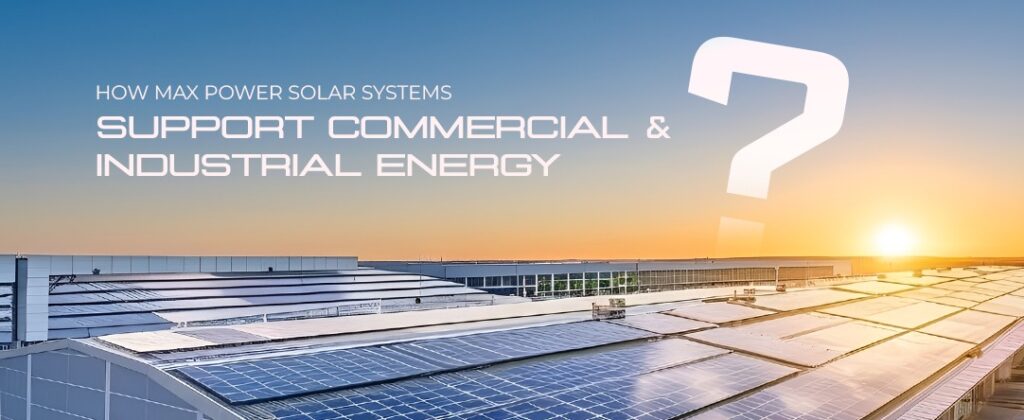
Pakistan’s commercial and industrial sector is not waiting anymore. With electricity bills doubling in the past two years and load shedding still a daily disruption across major cities, factories, textile units, hospitals, cold storage facilities, and office buildings are moving fast toward solar. And this shift is not small.
Commercial and industrial users occupied 51.10% of Pakistan’s installed solar capacity in 2025, anchored by textile and food processing clients seeking tariff relief. That number tells you everything you need to know about where the energy market is heading.
For businesses, the pressure is real. You cannot run a factory on an unpredictable grid, and diesel generators are expensive, noisy, and unsustainable as a long-term fix. This scenario is exactly where a well-designed commercial solar solution stops being an upgrade and starts becoming a business necessity.
Max Power recognizes these challenges, which is why it engineers its solar systems for commercial and industrial customers based on actual energy loads, not assumptions.
What Makes a Solar System Truly Commercial Grade
It Is Not Just About Panel Count
A residential and a commercial solar setup might both use similar panels on the surface, but they are fundamentally different products. A commercial system needs to handle heavy, variable loads continuously, often across three-phase connections, throughout the working day and sometimes beyond. It needs inverters that can manage surge loads, battery backup that keeps critical systems alive during outages, and monitoring tools that give plant managers real data in real time.
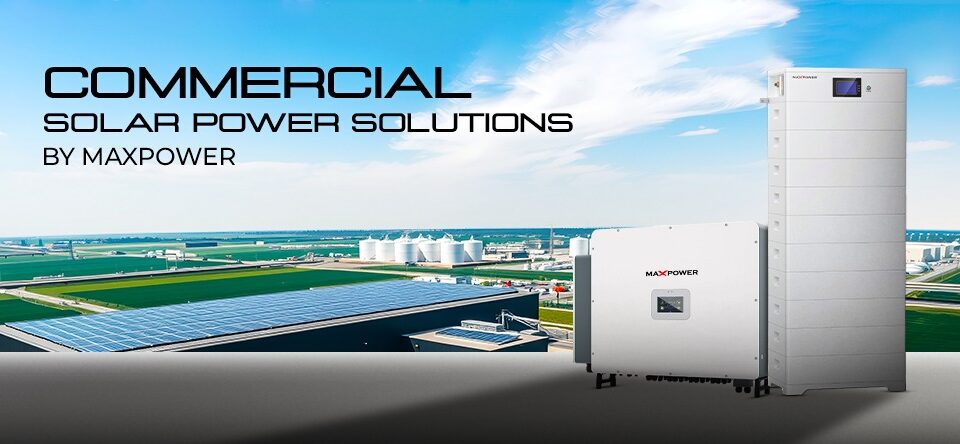
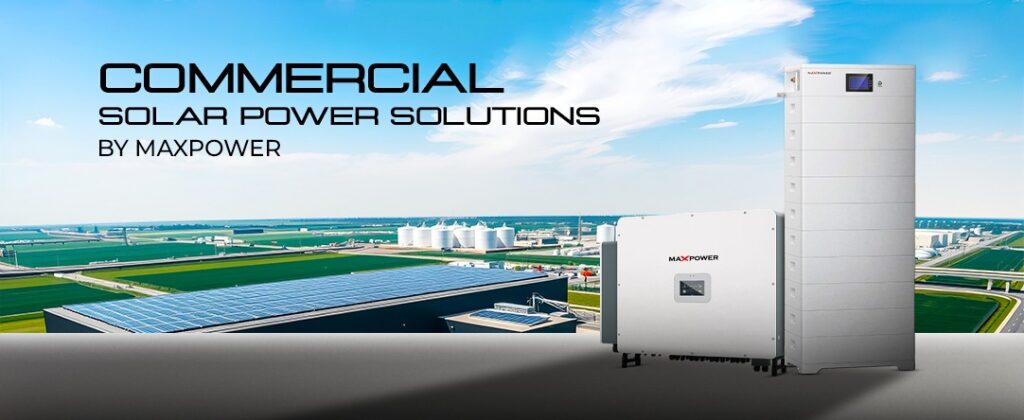
Max Power has designed its range of solar system inverter solutions in Pakistan to accommodate this reality. Whether you are running a 50 kW system for a mid-size factory or scaling up to a 500 kW grid-tied setup for a large manufacturing unit, the system architecture has to be right from the start.
On-Grid vs Hybrid: What Commercial Users Actually Need
Most large commercial facilities in Pakistan are looking at two configurations. On-grid systems reduce your DISCO bill by generating power during peak hours and either self-consuming it or exporting the surplus. Hybrid systems add battery storage to give you backup during load shedding, which is critical for operations that cannot afford any downtime.
The businesses making the smartest moves right now are choosing hybrid setups, even if the upfront cost is slightly higher. With commercial batteries, Pakistan built on lithium-ion. A hybrid commercial system gives you stable backup, better round-trip efficiency, and no maintenance headaches compared to older lead-acid banks.
How Max Power Approaches Commercial Solar Project Design
Load Analysis Before Anything Else
A detailed load assessment is the right approach before specifying a single panel. Max Power’s team works through actual consumption data, including peak demand windows, critical versus non-critical loads, and grid availability patterns in your area. This is what separates a properly sized system from one that either underperforms or costs more than it should.
The solar panel price in Pakistan conversation often starts with wattage, but for commercial users, the total cost of energy per unit over the system’s 25-year lifespan matters far more than the per-watt procurement price.
Three-Phase Systems for Industrial Applications
Most industrial operations in Pakistan run on three-phase power. These users require a commercial solar system that balances across all three phases and integrates cleanly with the facility’s existing electrical infrastructure. Max Power’s engineering approach ensures the issue is handled properly during the design phase, not discovered as a problem during commissioning.
The solar inverter price in Pakistan for three-phase commercial-grade units is meaningfully higher than single-phase residential inverters, and for this reason. These are industrial-duty machines built to continuously handle real commercial loads.
Industries That Are Moving Fastest Toward Commercial Solar in Pakistan
The solar energy companies in Pakistan serving commercial clients are seeing the strongest demand from a consistent set of sectors. These include:
- Textile and garment manufacturing—continuous motor loads, consistent sunlight hours in Punjab and Sindh making solar economics strong
- Food processing and cold storage—high energy intensity, sensitivity to outages making backup-capable hybrid systems essential
- Hospitals and medical facilities—critical load requirements where downtime is not an option
- Educational institutions and universities—large roof areas, daytime energy consumption profiles that align perfectly with solar generation
- Commercial real estate and office towers—electricity bill reduction combined with ESG commitments driving adoption
Pakistan’s net-metered solar capacity reached 5.3 GW by the end of April 2025, a figure that demonstrates just how broadly solar has been adopted across both commercial and residential sectors. For commercial users not yet on solar, this also means your competitors may already be operating at a lower energy cost than you.
What to Look for in a Commercial Solar Partner in Pakistan
Finding the best solar panel company in Pakistan for a commercial project is not the same as buying residential panels. You need a company that can handle project engineering, structural assessment, electrical integration, DISCO NOC, net metering paperwork, and post-installation monitoring and maintenance. A partner, not just a vendor.
Max Power brings all of these capabilities under one roof for commercial and industrial clients across Pakistan. From initial site assessment to long-term system performance monitoring, the goal is energy independence that actually delivers the ROI the business case promised.
Frequently Asked Questions
What size solar system does a factory need in Pakistan?
Most small to midsize factories use 50 kW to 300 kW systems, depending on energy usage.
Grid-tied or hybrid solar—which is better for commercial use?
Hybrid is better for load shedding, as it provides backup. Grid-tied only reduces bills.
How long does commercial solar installation take?
Typically 2–4 weeks for 50–200 kW systems. Larger setups may take 6–8 weeks.
What is the payback period for commercial solar in 2025?
Around 2–4 years for grid-tied and 3–5 years for hybrid systems.
Can solar handle three-phase industrial loads?
Yes, if designed properly for three-phase systems and balanced load usage.
Is Your Business Still Paying Full Grid Rates When It Does Not Have To?
The commercial solar opportunity in Pakistan is not theoretical. It is already delivering measurable savings for textile units, hospitals, cold storage operators, and office buildings across the country. If your business is still running entirely on DISCO power or expensive diesel backup, now is the time to evaluate a properly engineered solar solution.
Schedule a call with Max Power today for a free commercial energy assessment and a system proposal tailored to your facility’s actual load profile.